





Birthstone Jewellery: Uniquely Yours
A time honoured tradition
Far from a passing trend, birthstone jewellery has been worn for centuries as a meaningful way to mark time and identity. Whether chosen to celebrate a birthday, honour motherhood, or simply connect to a personal story, each stone carries its own significance. In many traditions, wearing your birthstone is believed to bring a sense of luck and connection.

What Your Birthstone Carries
Your Birthstone, Your Story
The concept of birthstone traces back to the first century, when historians connected specific gemstones to the twelve months of the year: each stone believed to carry distinct energy, protection, or meaning for those born under it. The tradition evolved through centuries of trade, religion, and cultural exchange before the modern list was standardized in 1912 the National Association of Jewellers.
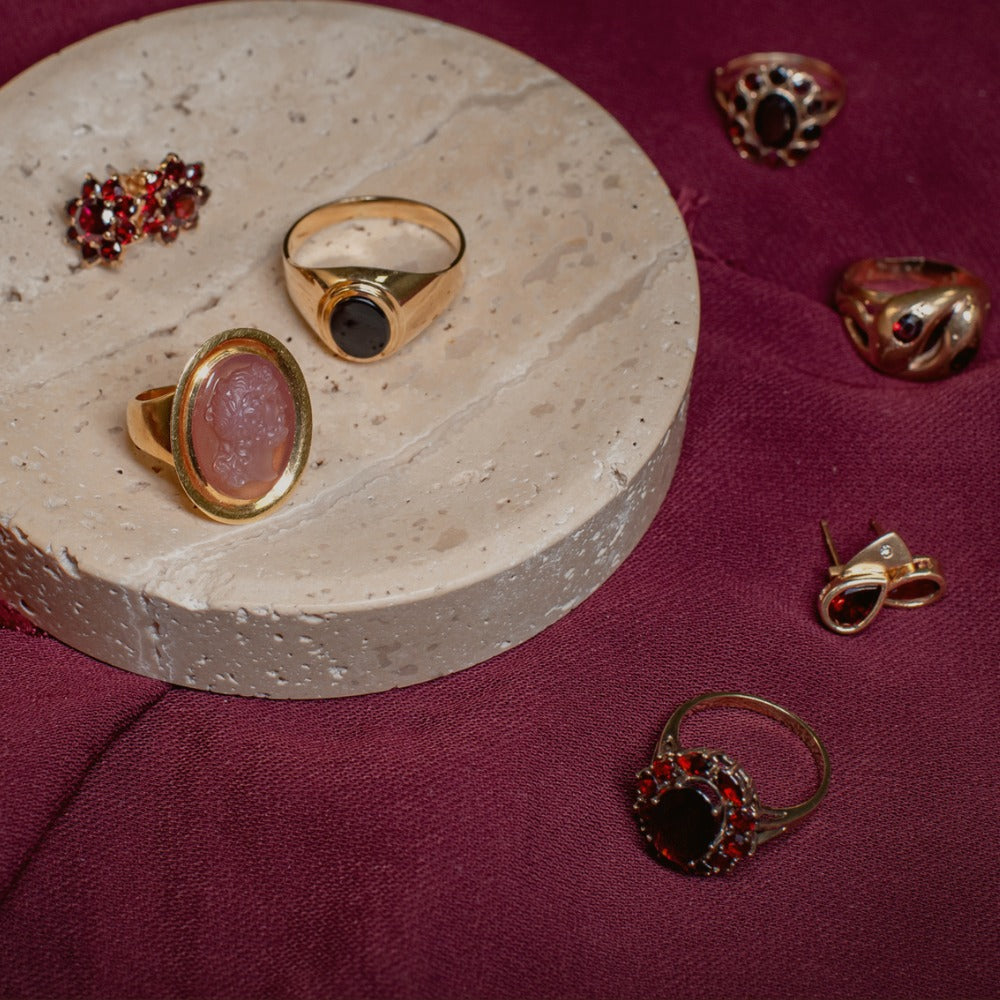
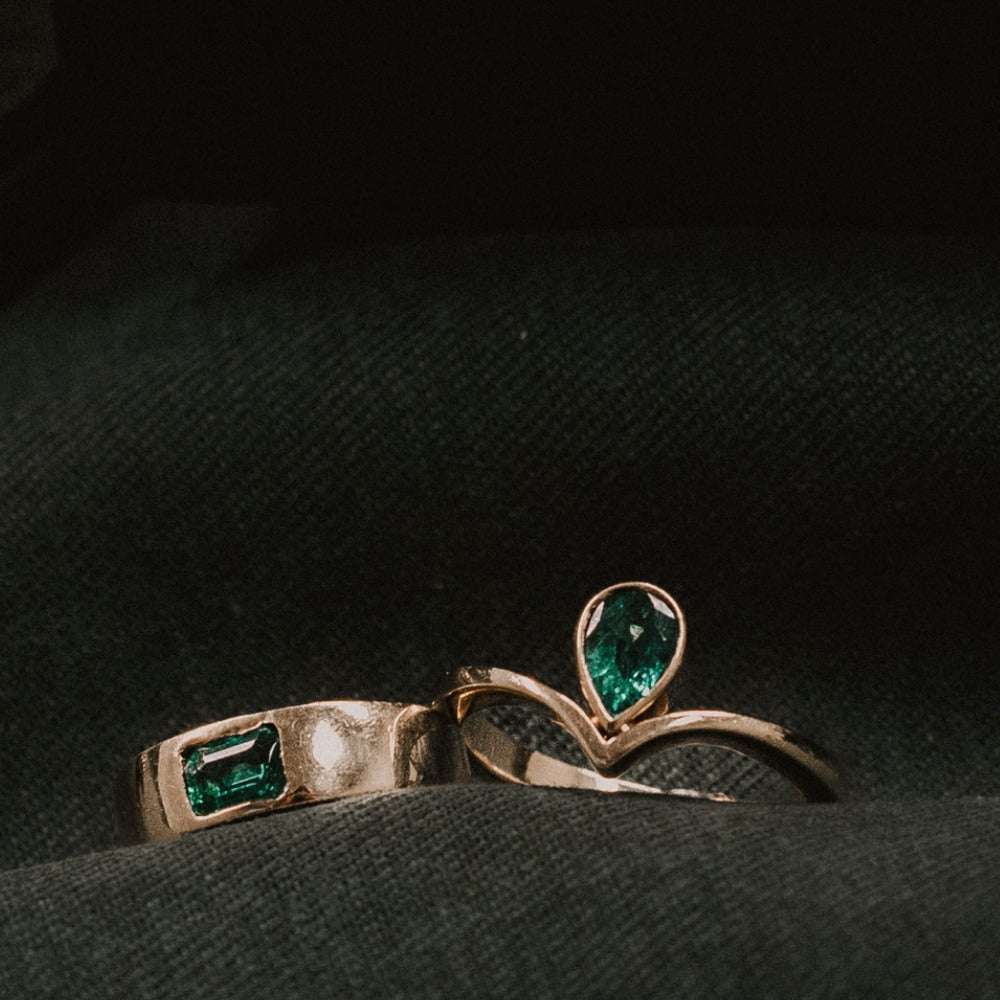
What stayed constant across every era is the belief that a stone chosen by birth month carries something personal. For example, for May-born people across cultures from ancient Egypt to the Victorian courts of England, emeralds represented growth, foresight, and the renewal of spring. A garnet wasn't just red, it was protection, friendship, and passion made tangible and wearable.
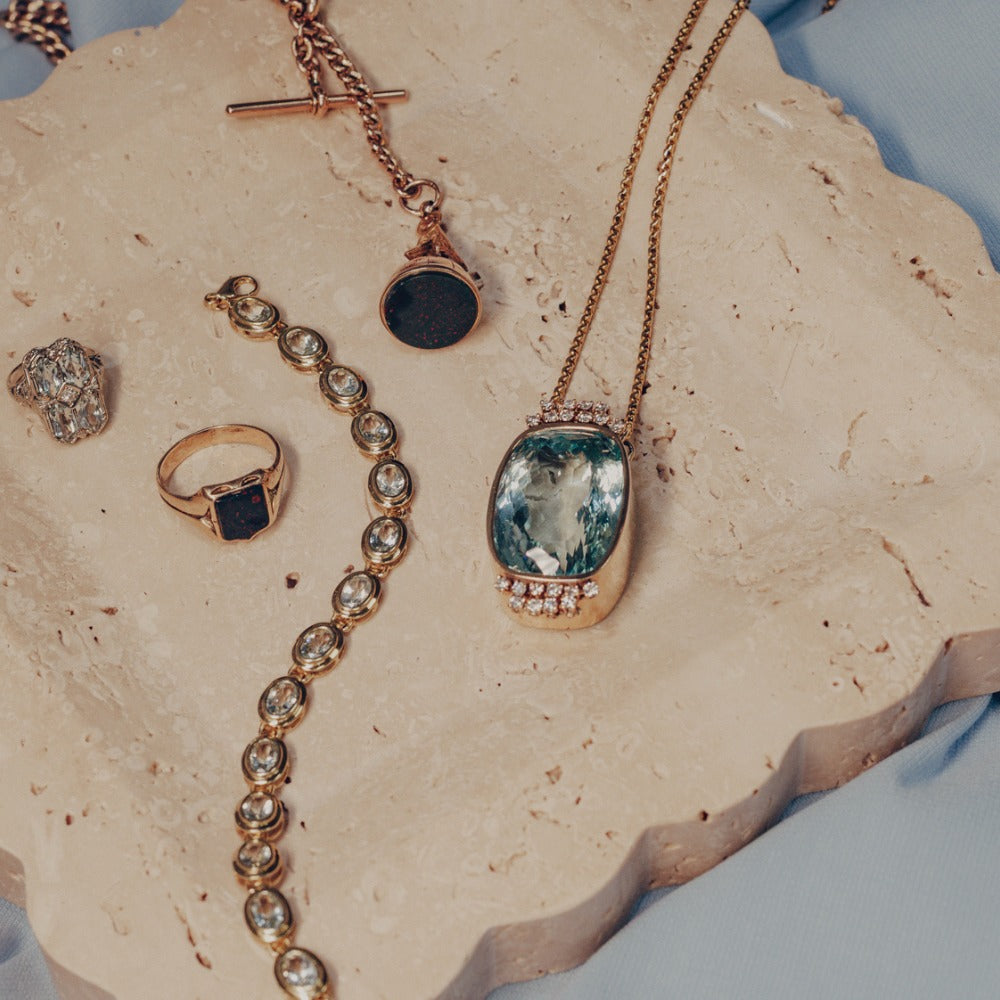
In vintage and estate jewellery, that history becomes physical. A Georgian garnet set in closed-back foil, or an Edwardian aquamarine in a milgrain platinum setting, was made in an era when gemstone symbolism was at its peak, not as superstition, but as intention.
When you find your birthstone in a vintage piece, you're not just wearing a gem. You're wearing a century of meaning.
expand your options
Alternate birthstones
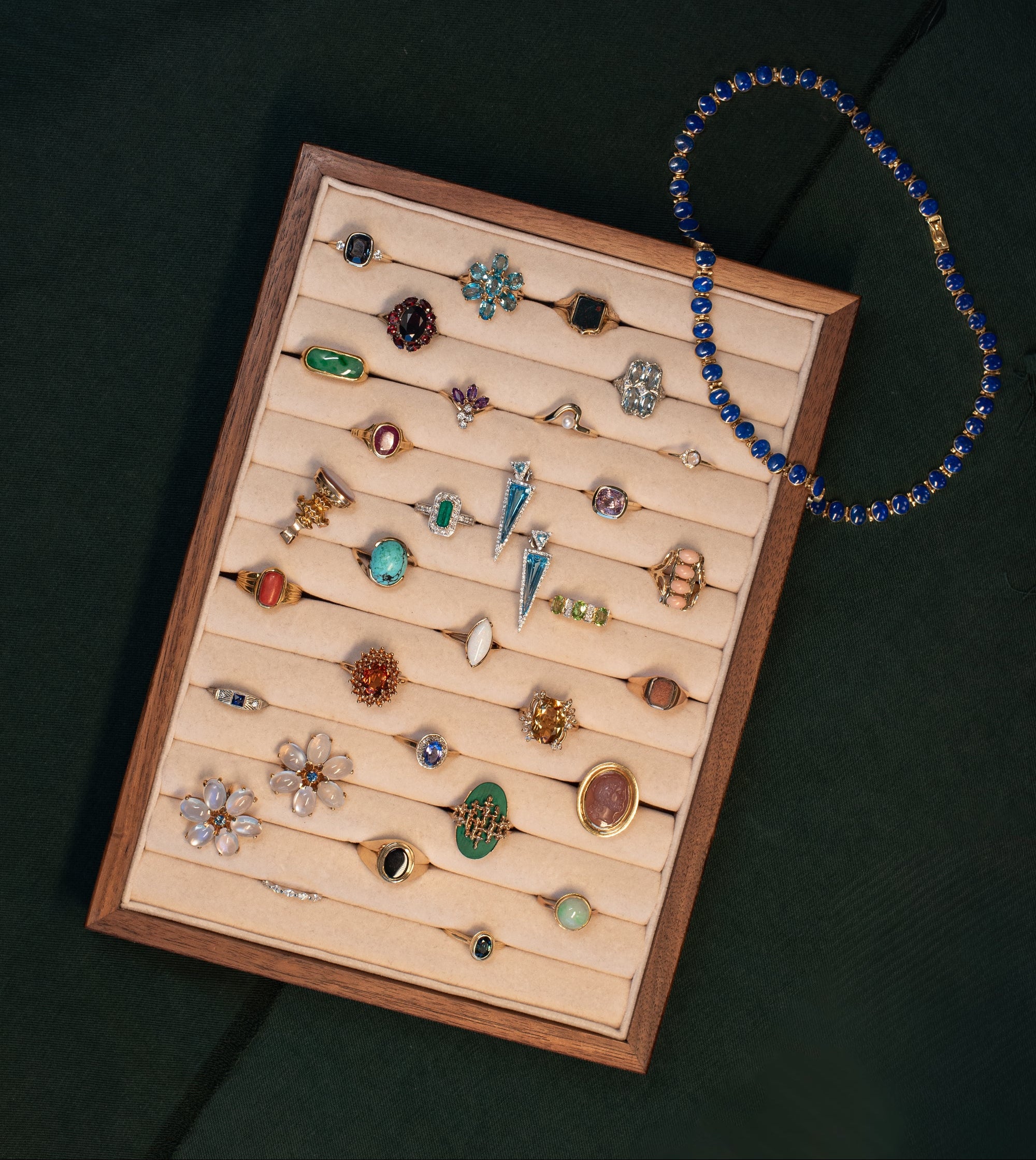
While birthstones have been standardized over the years; history, cultures & tradition feature many more.
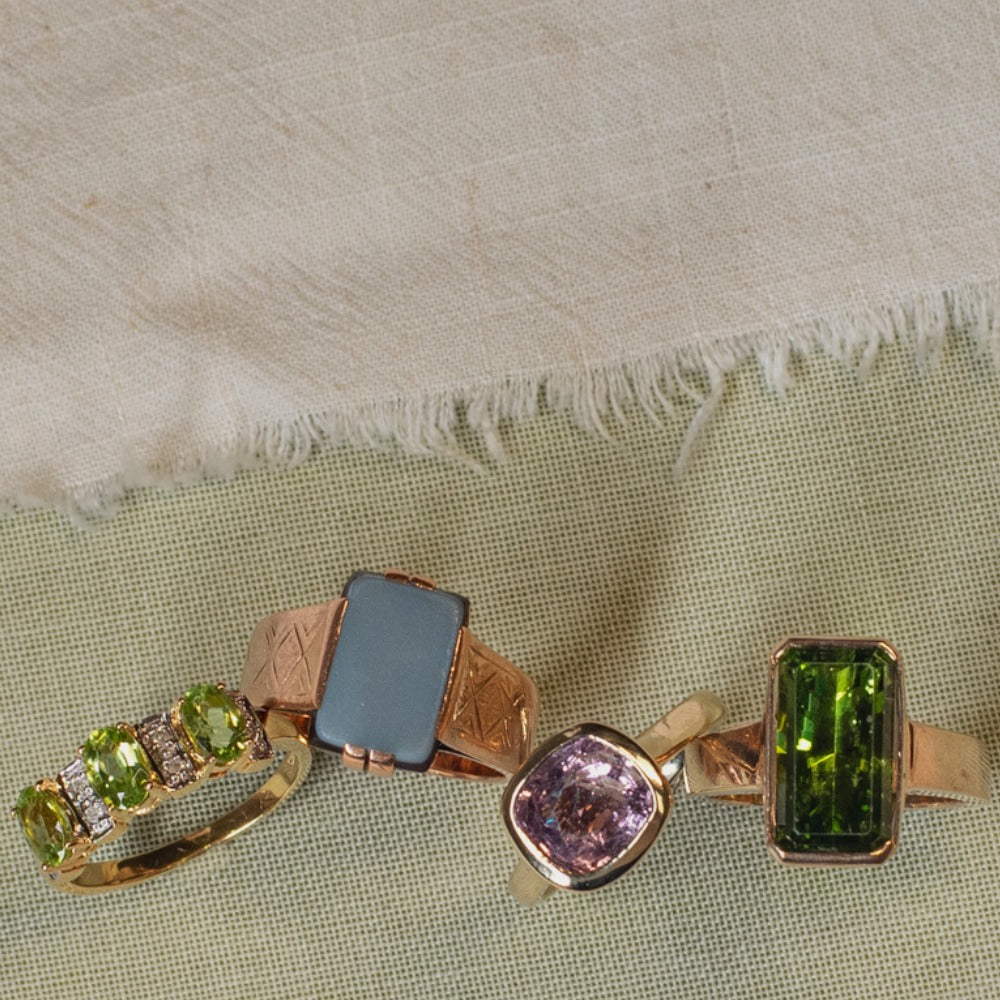
Alternate birthstones offer additional ways to connect with meaning, whether through colour, symbolism, or personal style. Explore beyond the expected to discover stones that feel just as significant; each carrying its own story and sense of connection.