




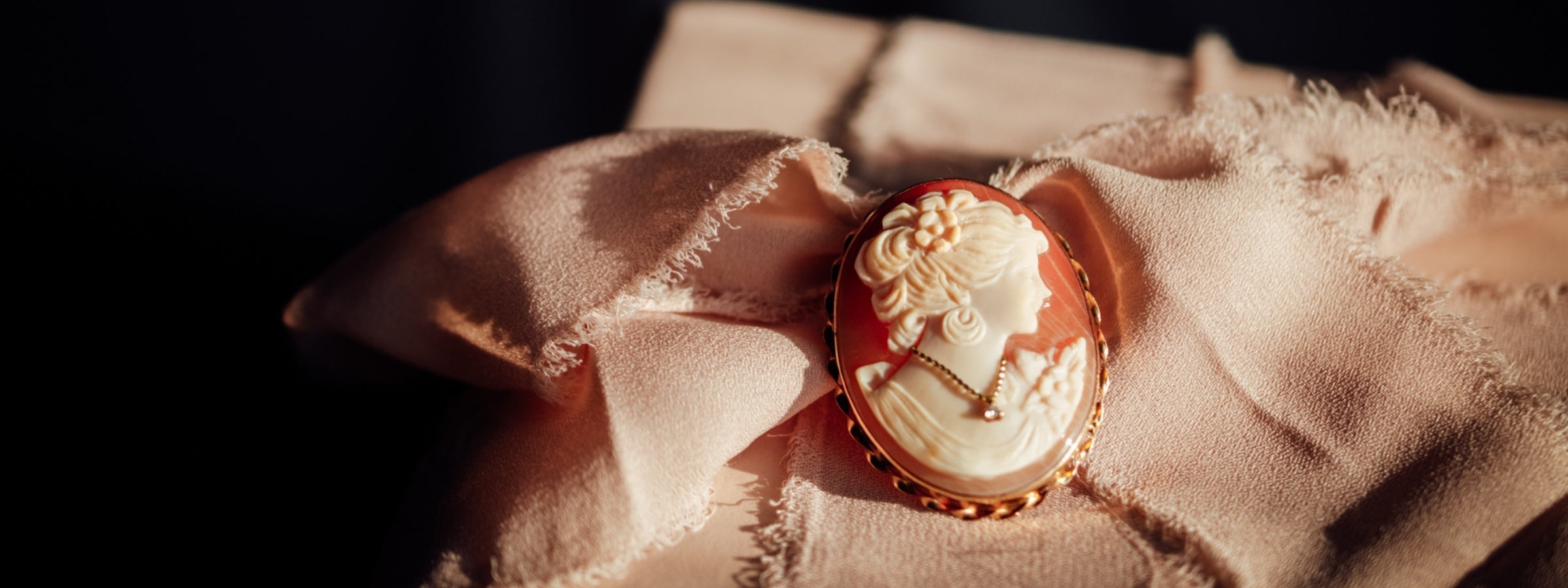
No piece of jewellery highlights a woman’s strength and beauty like a cameo.
As lovers of vintage and antique jewellery and the story that each pieces can tell as they're passed from generation to generation, 100 Ways has a special place in our hearts (and inventory!) for Cameo Jewellery.
We are excited to highlight cameo jewellery, the history and the art form as we release a special batch of vintage cameo pieces to our collection in celebration of International Women's Day.
Cameos can be recognized widely as the small, sculptural portraits tucked into antique and vintage jewellery, from cameo earrings to rings to bracelets and brooches, but there is so much more to these little works of art than what meets the eye.

Cameo Jewelry & the Female Form
Though not every cameo depicts a woman, throughout history, the majority of them have represented portraits of women, or scenes featuring women.
By far the most prevalent depiction we see in cameos is the woman in profile, otherwise known by jewellery historians as “the anonymous woman.”
Though her looks, hair changing style and features changed slightly evolving to suit the beauty of the time, she is a steadfast representation of timeless beauty and elegance.
 Other depictions of the female form found in these small carvings include powerful allegorical and mythological figures. For example mythological themes that have been common motifs in cameo carvings include:
- Diana, the goddess of the moon and the hunt, often depicted with a crescent moon in her hair;
- Demeter, goddess of the harvest, with a sheaf of wheat somewhere on her person;
- or, the Three Muses, goddesses of artistic and intellectual inspiration.
Ancient figures of feminine power and influence, for many generations, dominated the landscape of cameo jewellery.
Powerful Women & the Resurgence of the Cameo
The art of the Cameo and the timeless trend of wearable cameos actually pre-dates the time of Christ with ancient times cameos predating the rise of the roman empire. However, the popularization of cameo jewellery really only took off when a portrait of Empress Josephine, wearing a crown made entirely of cameos, inspired a trend across Europe.

Above: 1837 portrait of Empress Josephine by Frederic Westin; wearing the Cameo Tiara. Nationalmuseum, Public Domain.
Below: The Cameo Tiara detail & Crown Princess Victoria of Sweden wearing the Tiara on her wedding day in 2010.
This crown of cameos, known as the Swedish Cameo Tiara, is a remarkable piece of historical jewellery: it's a grand tiara of solid gold, set with pearls and large, exquisitely-made neoclassical-style cameos. This was a departure from the more popular diamond and gold crowns of the time.
The cameo style of the era was significantly inspired by Ancient Roman aesthetics, as many Roman archaeological treasures were being rediscovered during this time.
It is also interesting to note that the seven antique cameos used in this impressive tiara were commissioned by Napoleon to several different jewellers, and were actually not intended to go together at all. As such, they are all different sizes and colours and were were later set into the crown by a solitary jeweller.

Above: Queen Victoria by Bassano and Unknown; Public Commons
But if Josephine could be credited with the re-introduction of cameos into the popular imagination, then it was Queen Victoria who made them as dazzlingly popular as they are today. The Queen famously wore cameos depicting the profiles of her children and husband throughout her life; she also encouraged the public circulation of her own profile on cameos.
The popularity of the cameo in Victorian England is also attributed to the (relatively) newfound affordability and ease of travel to Italy by the middle class. Italy was where the finest cameos were crafted by generational cameo artisans; a piece of cameo jewellery from Italy became the hallmark of the wearer's refined taste and wealth.
The cameos of this period also became progressively more personalized and elaborate: English tourists began to commission these Italian skilled artisans to create cameos in the likeness of themselves or of people they loved. It is this quirk of the era of “grand tour” jewellery that can (probably) be credited with the move away from allegorical imagery in cameos to the more ubiquitous “anonymous woman” we see everywhere today. In many ways, this once-ancient style of jewellery became the marker of Victorian-age British identity.

A Brief History of Cameos
It has been speculated that the Sumerians were the first to use cameos in a significant way, using them as personal seals. This was a trend that the ancient Greeks likely followed, though we know that the Greeks used cameos as currency, as well.
During the reign of the Roman Empire, cameo sculptors began to incorporate political figures into their work. During the Renaissance and Elizabethan eras, owning and wearing a cameo indicated that you belonged to a certain cultural and financial class.
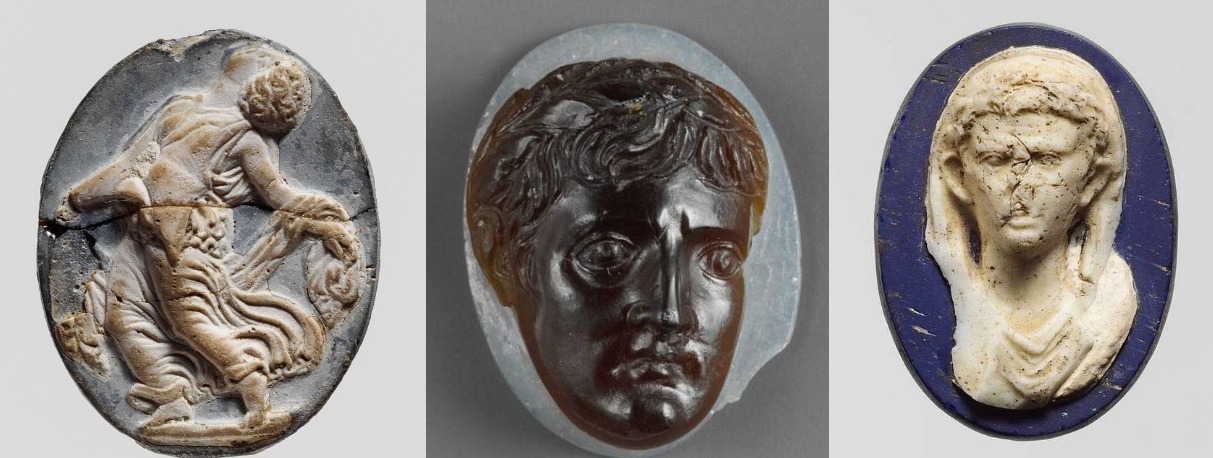
Above: various examples of ancient cameos dated back to the Roman-era, Public Commons. | Below: from left to right, cameos carved in coral, onyx, and hardstone (public commons)
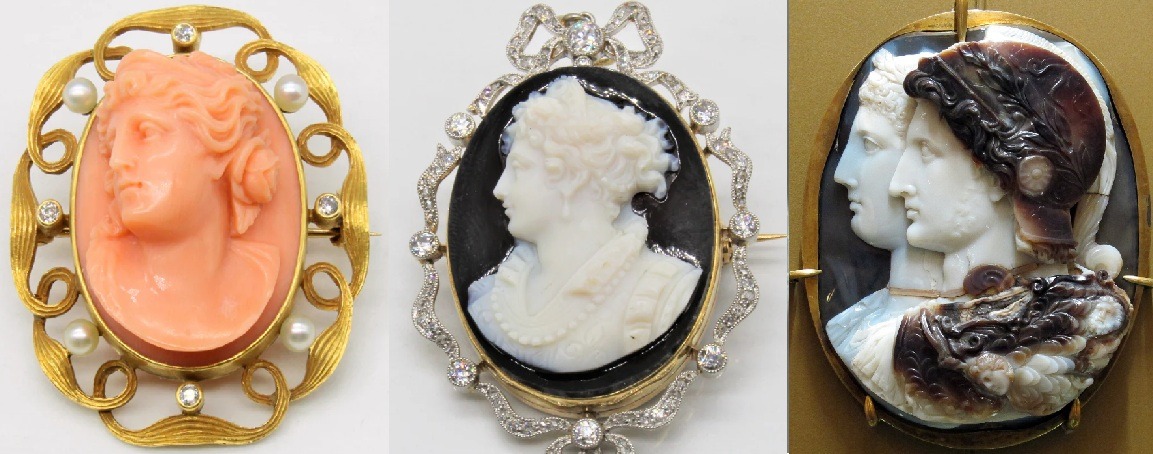
When we say “cameo” in a jewellery context, we are usually talking about any carved, raised relief of natural materials such as hardstone or shell, though it is very important to note that the earliest forms of cameo were made in molded glass, and plenty of cameos were (and still very much are) carved in semi-precious stones like amethyst, moonstone, and coral.
The term “hardstone” is a broad description to encompass stones such as agate and sardonyx. These stones were favoured by cameo craftsmen for their durability, their colour variations, and their glossy beauty; however, hardstone is a distinctly more challenging material to carve.
Cameo jewellery, featuring fine lines and relief images are typically set in precious metals to best show off these exquisite pieces as wearable art, most commonly in cameo brooches or a cameo necklace, oftentimes a convertible cameo pendant to brooch.

Above: Cameo of "Leda and the Swan", carved in a Cameo Shell (Cypraecassis rufa). Property of Hofer Antikschmuck, Berlin (Germany), FHorsthemke; Creative Commons.
Upon the discovery of Shell as a canvas for Cameo carving, it began to be widely favoured by artists for its significant softness as a medium. Cameos carved in shell enjoyed a newfound popularity through the aforementioned Empress Josephine and Queen Victoria, who sported them casually and daily.
Soon after the discovery of Shell as a material for Cameos, Lava stone was discovered by archeologists. While many cameos were carved in this fascinating substance, lava cameos were far more delicate than shell cameos; as a result, nineteenth century lava cameos in good condition can hold significant value today, as not many remain intact.
As Cameos reached their crescendo of popularity in the late Victorian era, they were being imported in droves from Italy into England. They would be shipped loosely, hand-made but unmounted in base metals, waiting to be set by English jewellers into whatever setting their client so desired. There was a tremendous selection of mountings to choose from: neoclassical styles inspired by archeological discoveries; the Etruscan revival style; simple gold bezels, unadorned or embellished with gemstones.
These loose cameos imported from Italy were set by Victorian jewellers into rings, brooches, bracelets, lockets, and pendants– the possibilities of style and form were endless, and many Victorian and Edwardian-era ladies owned multiple pieces of cameo jewellery to suit special occasions and daily wear.
After the second world war, plastic became widely available and made its way into every part of industry—including jewellery. Cameos could now be produced in plastic, and therefore collected by people from any economic background.
It can be argued that these plastic versions are not 'true cameos', often called 'fake cameos', but we can also argue that this newfound accessibility and popularization of costume jewelry is what kept the affinity towards cameos alive in the modern imagination and in contemporary fashion. Cameos since have been featured by many fashion designers through every different era and well into the 20th century.

The Art of the Hand-cut Cameo
As far as natural, hand-carved shell Cameos go, the first step for the cameo artist is selecting the mollusk they will use. Usually they will choose a shell that has two layers, like a Cassis mollusk. These types of mollusks (which are usually Conch) will have a white layer on top, and a secondary layer below–most often in an organish-pinkish hue, but sometimes brown, or entirely pink, or entirely orange.
A piece will be taken from this shell, and then roughly shaped by machine into the size the artist desires. This is about the extent that a formal cameo artist will use a “machine” in their work. Once this piece is cut, this traditional carver will use fish glue to attach the piece of shell to a wide wooden stick, which is then held next to a hard surface as they begin the carving process.
The artist cuts and carves into the top whitish layer to begin to reveal the portrait or image they’re seeking, using a traditional tool for the carving, like a “bulino”. Around the raised portrait they’ve carved, they will also have cut deeply down to the contrasting background colour, which gives us the classic two-tone look we’ve come to expect from most Cameos.
Various factors will determine the intricacy of the carving, such as the thickness of the shell, how dramatically it curves, and the layers of colour that could be hiding beneath the white outer layer. A skilled cameo artist will know how to adapt their carving to the conditions of the material, sometimes having to pivot halfway through the process.
The cutting and carving process is significantly different for a hardstone cameo, which we now know is the rarer and (typically) more valuable type of Cameo. Hardstone cameos, given the unyielding, rigid composition of the material (as opposed to the pliant and soft Cassis mollusk) needed a very specific kind of lathe, drill, and wheel in order to be cut. Where a shell cameo could be quickly fashioned into a range of carvings in a matter of days, hardstone cameos often took months to complete.
The significantly easier process of carving shell, which was usually comparable in beauty to hardstone, is what kept the shell cameo popular with English tourists looking for souvenirs of their trip to Italy.
In fact– the medium of shell was so agreeable and yielding, that artists would often be able to carve a cameo of a live subject on the spot, as though they were sitting for a painting! These rarer, “from-life” cameos were often distinguished with an engraved notation on the back of the piece, a perfect cameo souvenir for many wealthy. Though by the time the popularity of cameos reached it's height in England, photography was being widely employed as reference material for cameo carvers and painters alike. 
Motifs & Details to Look for when Dating a Cameo
As with any jewellery piece set into precious metals, many cameos will feature hallmarks or stamps which may indicate when they were assayed. While this is a fairly reliable way to date jewellery, there are also stylistic evolutions through history and changes to the method of making jewellery that we can turn towards to help date an antique cameo.

Above Left: Photo courtesy of Scott Papper, GIA GG, AJP, CMA (NAJA), Global Gemology & Appraisals | Above Right: 100 Ways
One of those stylistic evolutions is known as a “cameo habillé”. This style offers the traditional portrait of the “anonymous woman” with a diamond necklace around her neck. This trend began in the later part of the nineteenth century, so if we see this diamond detail, we can safely surmise that it was made after 1900 (sometimes well after, though sometimes a bit earlier).

Above: Examples of older cameos that have been re-set into more modernized settings (100 Ways)
One might think that the fastest way to identify the era of a piece is to look at the actual setting the cameo is set into. This could be a succinct and straightforward way to do so, but it should be noted that it was very common for someone to take a Victorian or even Georgian-era cameo and set it into a more modern setting.
We should remember that the preservation of authentic antique jewellery really only became popular as a collectors hobby in the post-World War One era. Before this, it would have been completely ordinary for an Edwardian era (1910s) woman of means to take an inherited Georgian-era ring, remove the diamond, and melt down the setting for something much more modern. The same can be said for cameos and their settings.
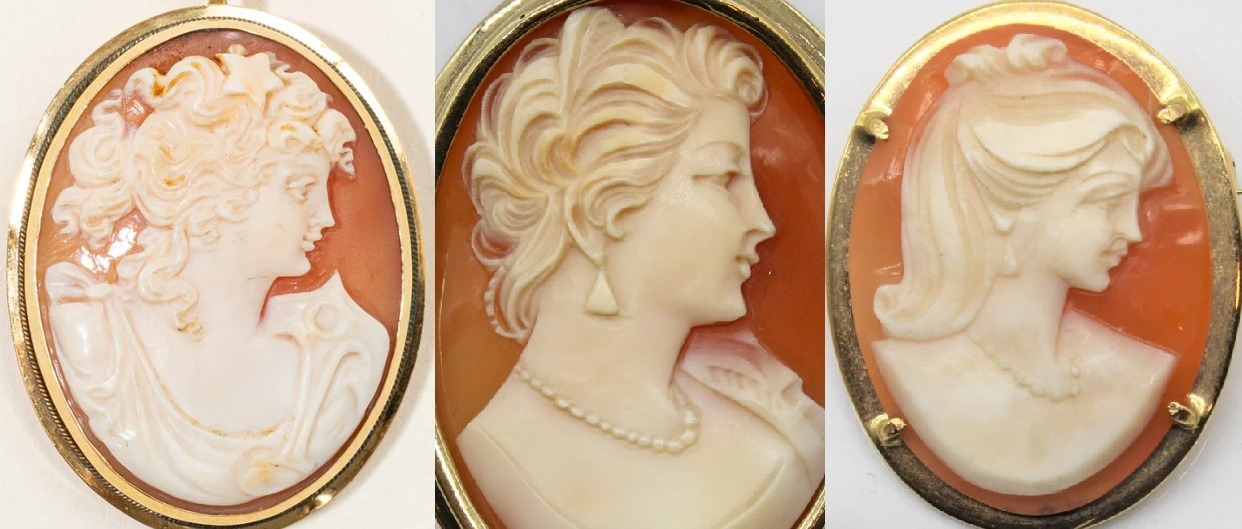
Probably the most popular way to date authentic cameos is to pay close attention to the shape of the nose. In the first half of the 19th century, a very straight, neoclassical Roman nose was favoured as the standard of elegance and is favoured in the detailed reliefs of these early cameos.
Victorian society, on the other hand, prized an upturned nose; and later on, into the roaring twenties and leading up to the Second World War, the noses on these “anonymous women” became ever more upturned and sloped. We can also surmise the era of a cameo by the hairstyle and dress of the subject; cameo portraiture was very much a reflection of the tastes and trends of the time.
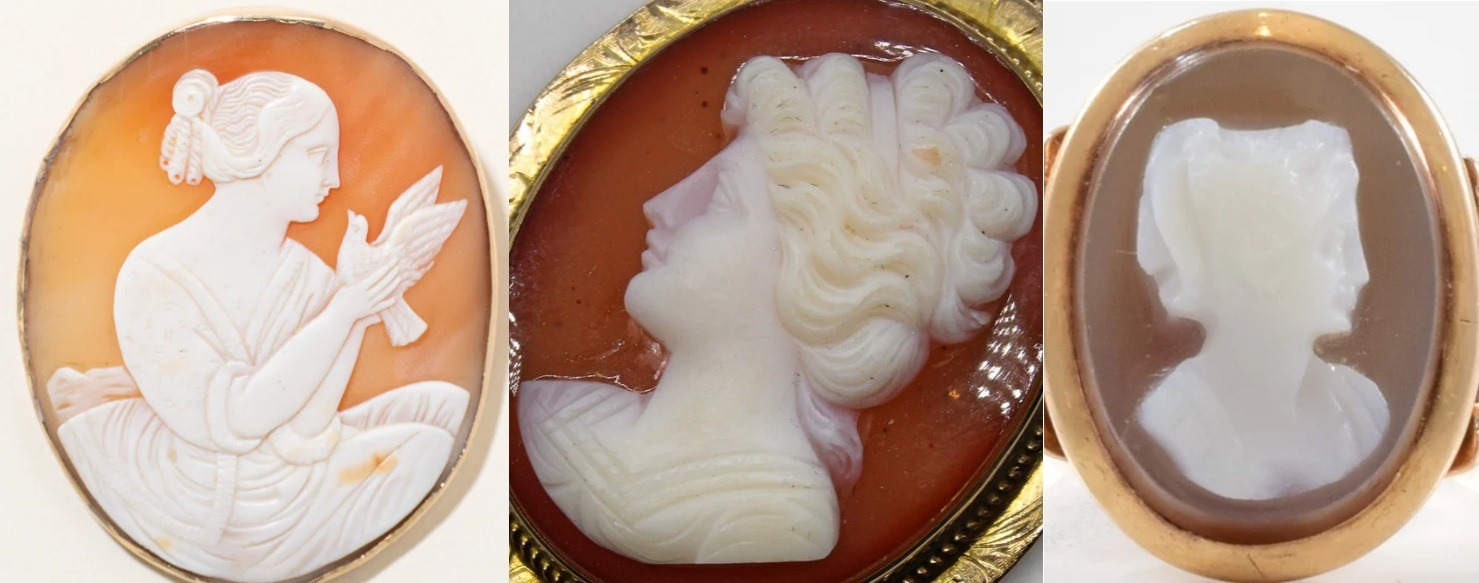
Above: examples of the straight, neoclassical nose favoured in the earlier half of the 19th century.| Below: from left to right, the progression of the upturned slope we saw at the end of the 19th century & beyond. All photos from 100 Ways Inventory Pieces
How to know if your cameo is Plastic or Machine-made
Though it is not a hard and fast rule, it’s usually a good indication that you have a natural Shell cameo if you can see through it with the naked eye when you hold it up to the light. Plastic cameos are not transparent; however, valuable hardstone cameos are rarely transparent either. So a transparent cameo is usually a good indication that you have a Shell cameo, though it’s not indicative of much else.
At some point in the post-war world, ultrasonic machines began to cut shell for the first time (yes, natural shell, not plastic) into cameos, and these flooded the market at low prices. In the book “Cameos: Old & New” by Anna M. Miller, it is estimated that as much as eighty percent of cameos produced in the early 1990s were being cut by an ultrasonic machine.
If you use a loupe to examine your shell cameo and you see very uniform, parallel ridges across the entire surface of the carving, this is a good indication that your piece is not hand-carved. What you want to see is irregular nicks from carving tools, indentations, or the asymmetrical movement of subtle chisel marks across the surface of the cameo. This usually indicates a human hand made the piece.
Other lesser-known tips in identifying the pedigree of a cameo is the shape: plastic cameos will usually have flat backs, while a natural shell cameo has a back that is gently curved, like a spoon. Temperature can also be a good indication of a natural versus synthetic material. A synthetic material will warm up as you hold it; a natural material will more likely stay cool to the touch for longer, despite your body heat.

Cameos: A Cultural Legacy Preserved & Kept Alive by Women
Cameos are some of the most widely-collected pieces of jewellery across all tastes and socioeconomic situations. They are true artifacts of their era, telling us stories about the societies they were fashioned in– and in turn, women across generations used these cameos to tell stories about themselves. Like in most things, women are the keepers of culture; it is no surprise then that we have women to thank for keeping the Cameo alive in our collective cultural consciousness.
Beyond the history of women appearing in cameos themselves, the legacy of cameo jewellery is kept alive by women today. Once considered a grandmother-esque accessory, Cameos have enjoyed a resurgence of popularity in modern fashion. This timeless icon is being worn in modern and fresh ways, as bold statement pieces or paired with modern apparel. Red carpet moments and celebrity wears from Rhianna, Cate Blanchet, Beyoncé, Sarah Jessica Parker, and Chloë Sevigny have brought new attention to this ancient art form.
As the cameo continues to evolve, writing it's story into modern culture, the way cameos are worn isn't the only thing changing. The female figure will always be closely tied to cameos, but we're seeing a wider range of motifs in the modern cameo from animals to landscapes and intricate scenes.

Where can you buy antique cameo jewellery?
If you've fallen in love cameos steeped in history and want to find the perfect cameo for yourself, where should you look first? As with any antique jewellery piece, there's a range of places you can look both online and in person.
If you're looking for affordability, there are many incredible reproductions available, but we're partial to a true antique cameo. Jewellery from the 19th Century in general can be difficult to find and even more difficult to know whether a piece is truly vintage or reproduction.
We're proud to have a selection of vintage and antique cameo jewellery pieces here at 100 Ways that have been inspected, graded, and authenticated by our experts using gold testing, hallmark and stamp identification, and context clues such as the materials used and craftsmanship techniques.
If you are buying from another retailer or individual, these are things that you could ask about to help verify what you're purchasing and can indicate a high quality antique piece of jewellery.
If you do have questions for us about any of our products or would like any further information on a piece, we're always happy to answer them with a quick message, or you can schedule an appointment in store or virtually- we'd love to help you get a closer look at the pieces you love.
In this collection you'll find antique hand carved cameos as well as machine fabricated cameos alongside antique and modern cameos. As this is such a popular style of jewellery, we're regularly adding new inventory in a range of styles.
We drop new jewellery pieces to our store every single Monday and Friday. You can sign up to be notified about each new drop!
ARTICLES DE BLOG RÉCENTS
DÉCOUVREZ NOS COLLECTIONS

Produits associés
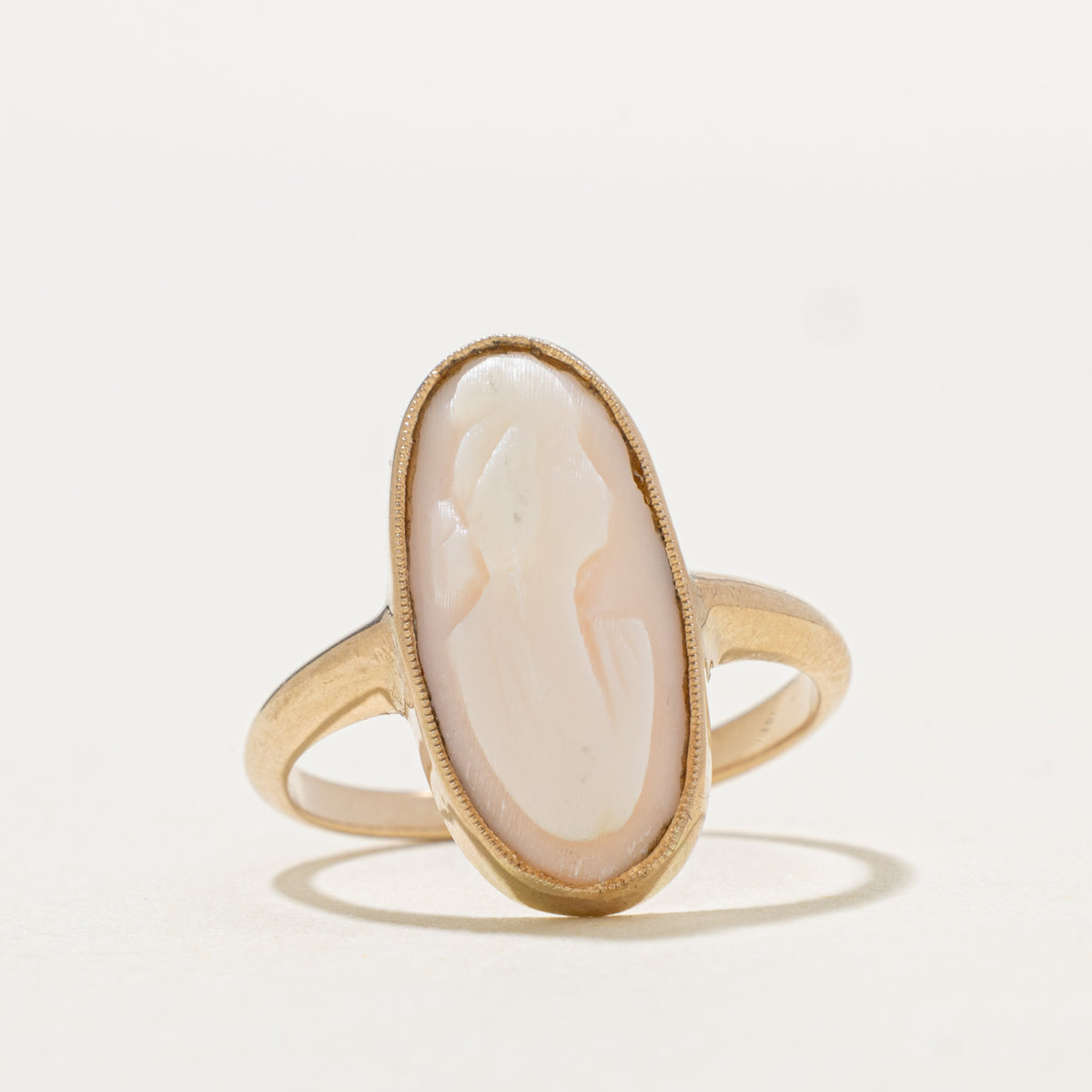
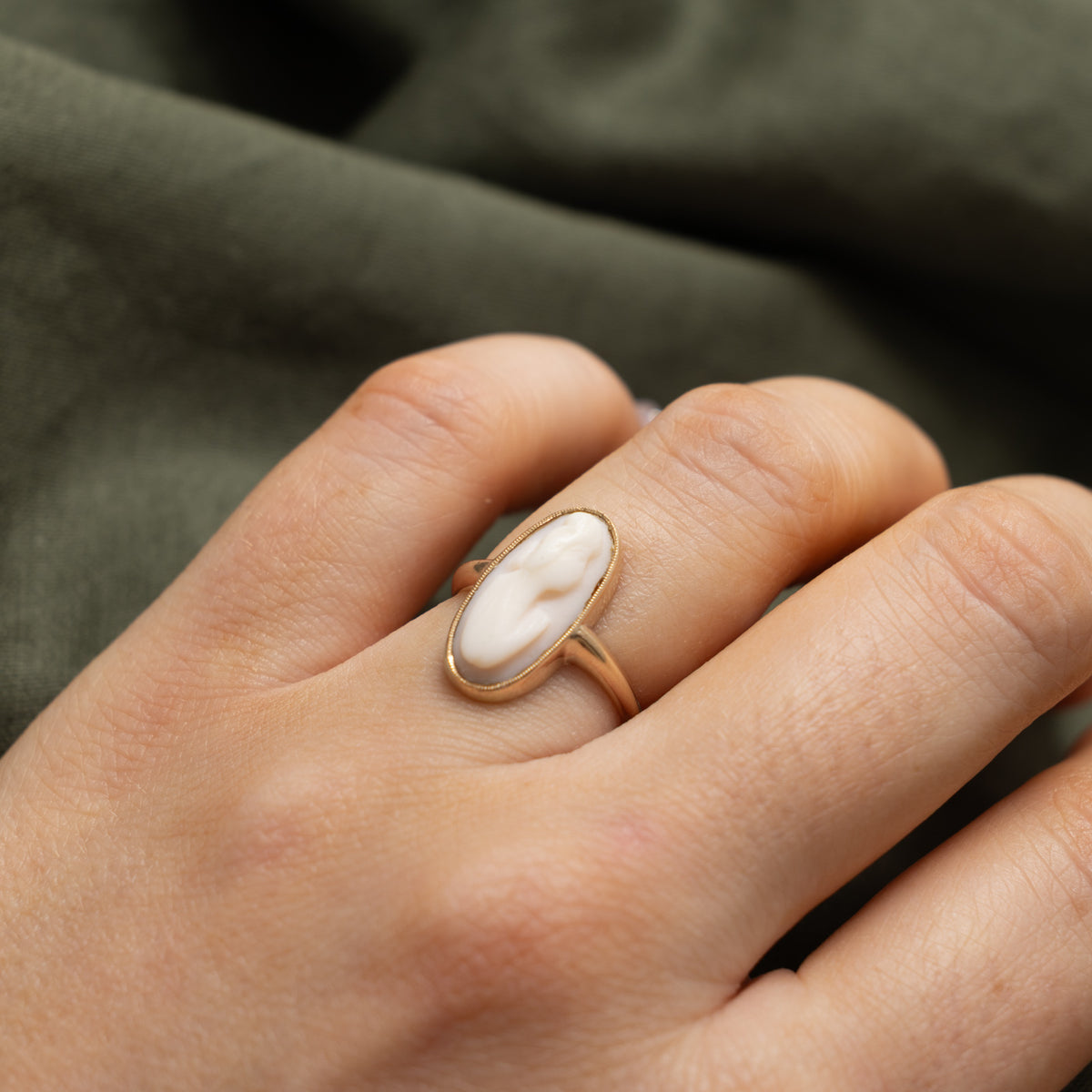
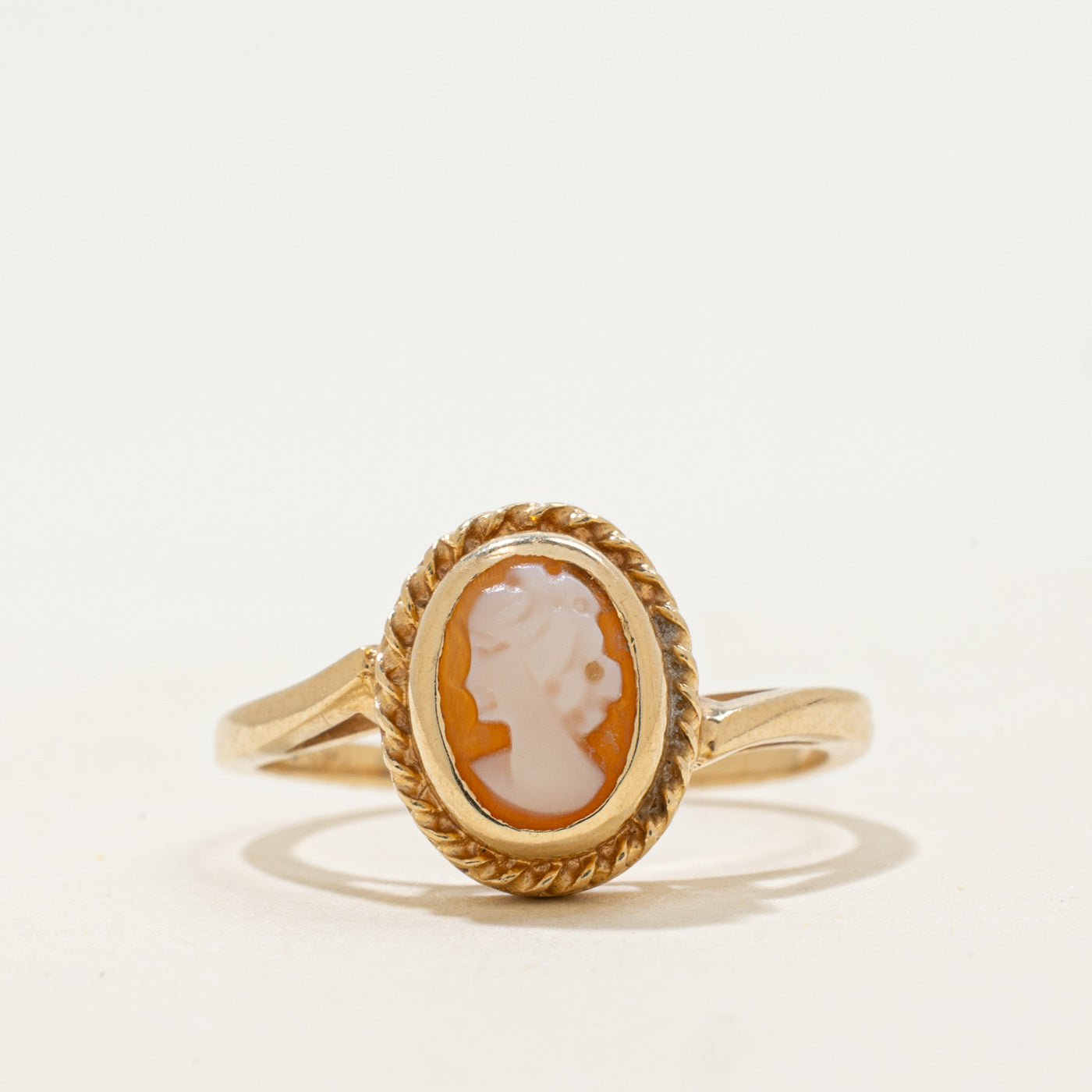
10k Bezel Set Shell Cameo Milgrain Ring
3.28ct | SZ 5.25
Prix de détail estimé$1,775 CAD
Prix de vente$475 CAD
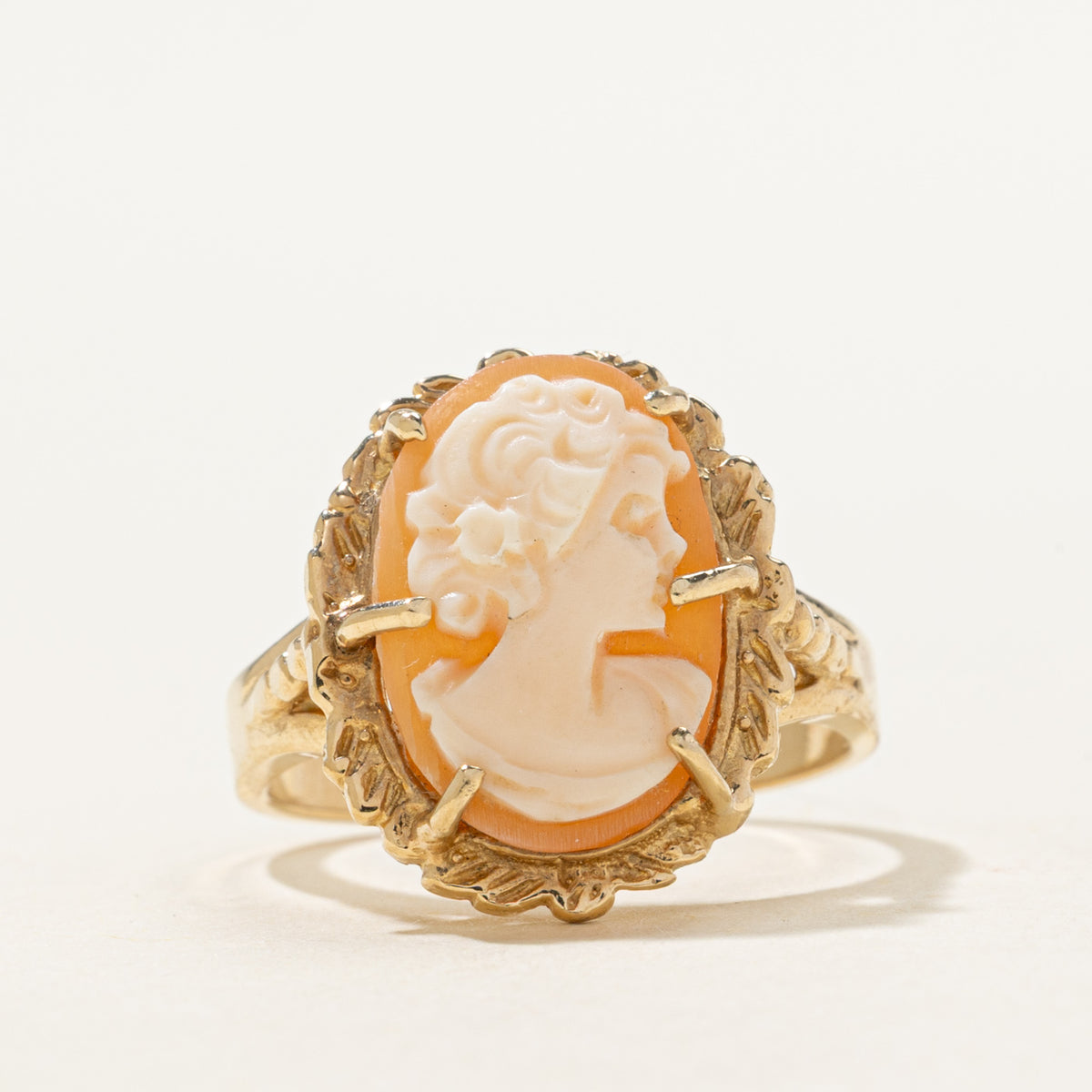
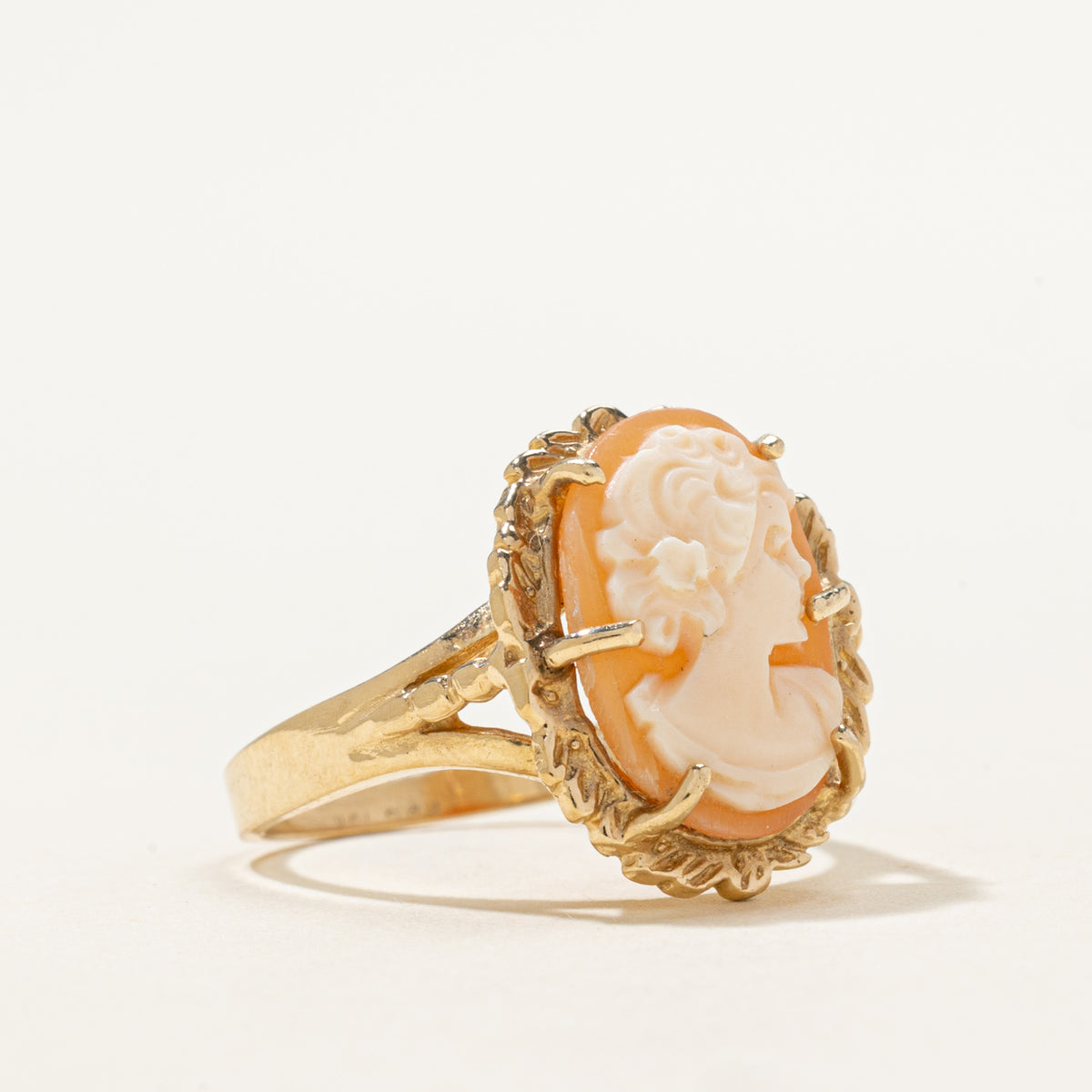
10k Solitaire Shell Cameo Floral Accented Ring
2.70ct | SZ 7.5
Prix de détail estimé$2,375 CAD
Prix de vente$795 CAD
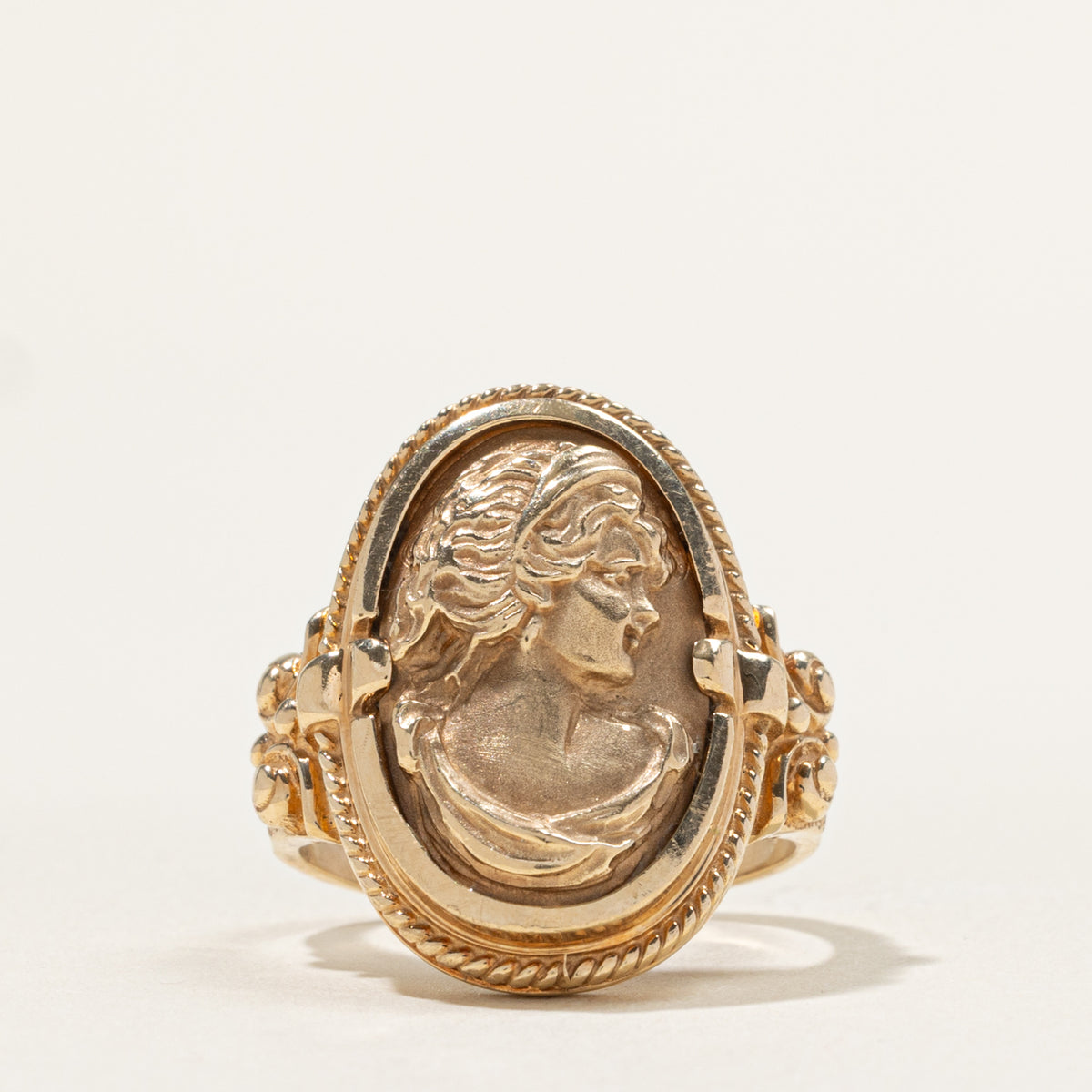
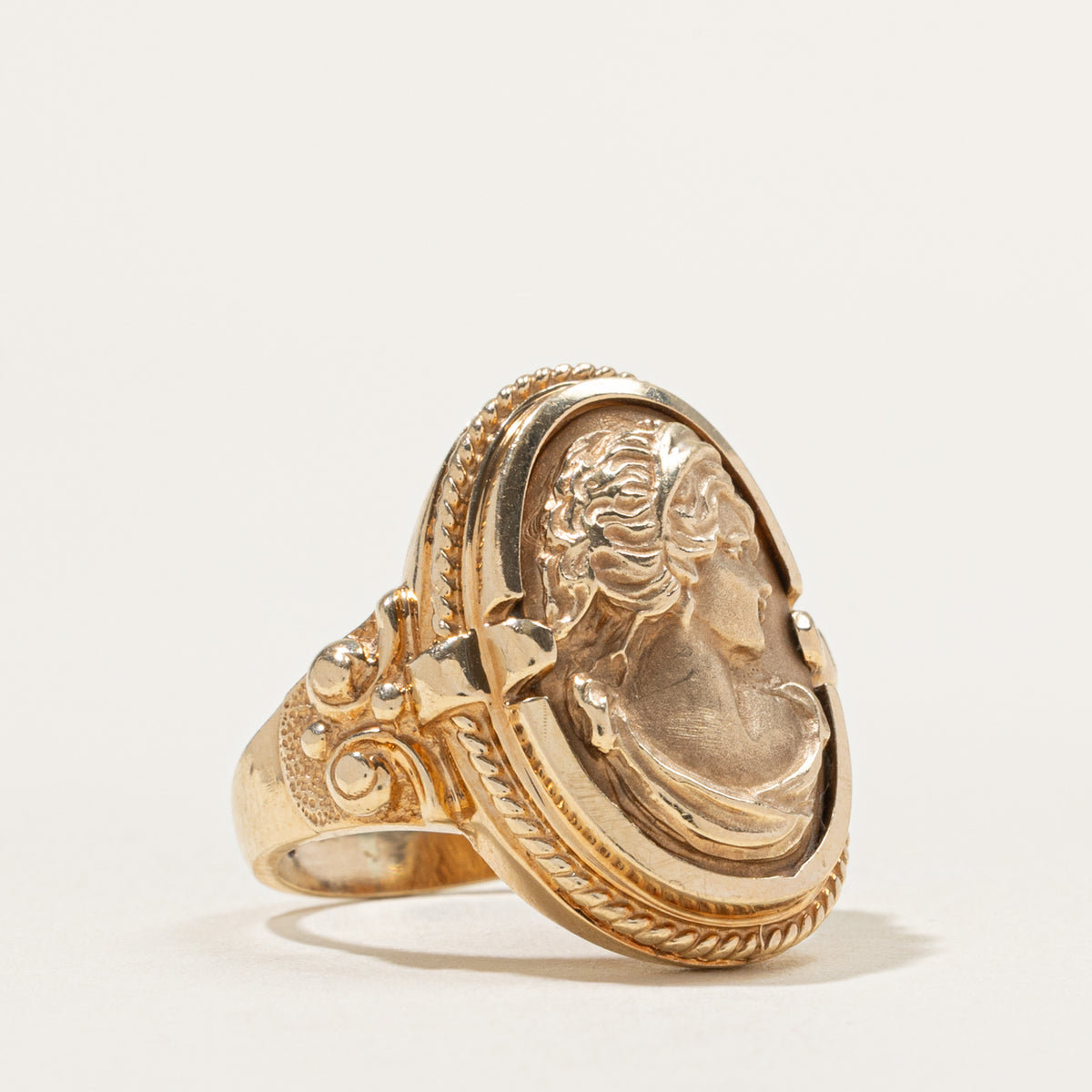
10k Yellow Gold Cameo Cocktail Ring
SZ 7.5
Prix de détail estimé$3,250 CAD
Prix de vente$1,295 CAD
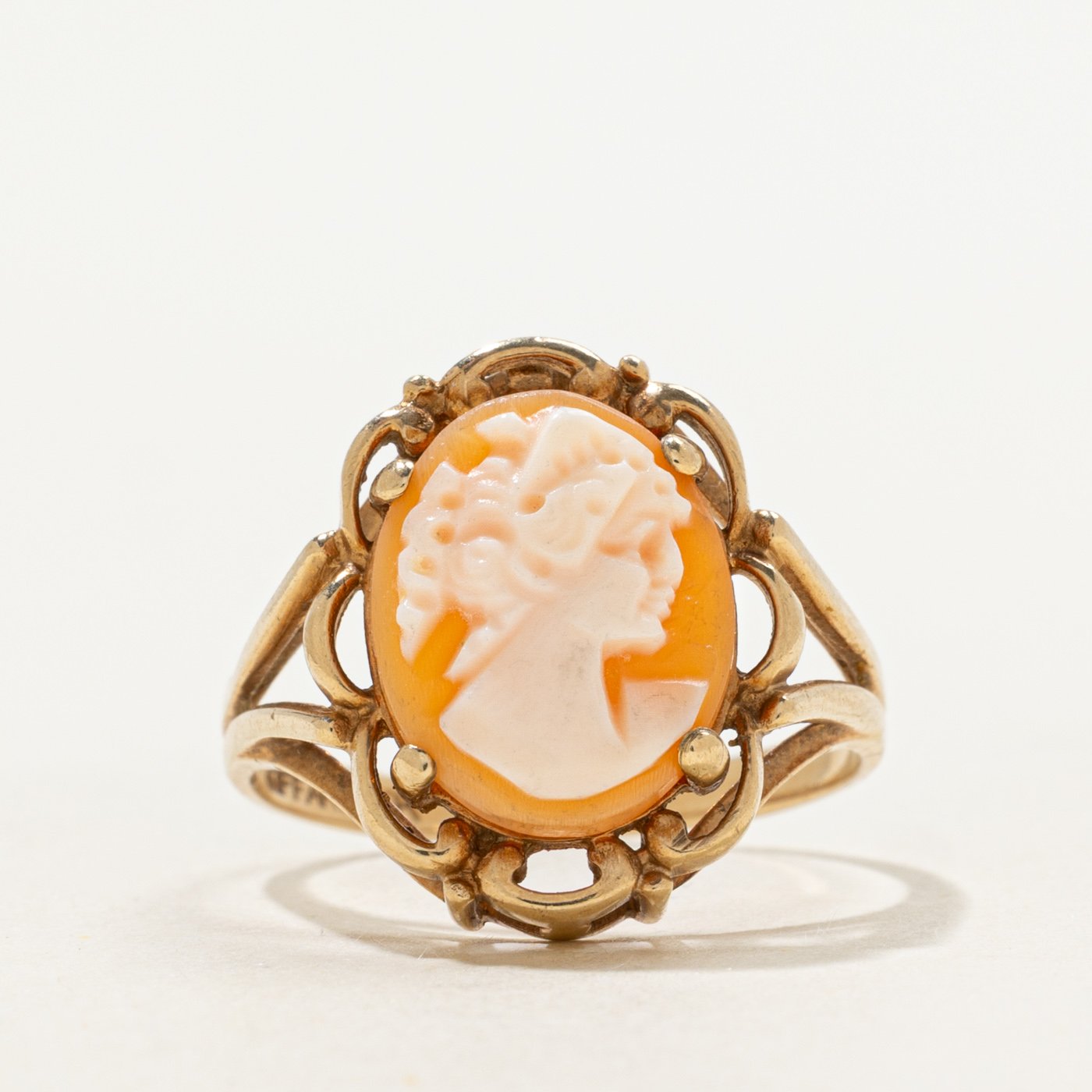
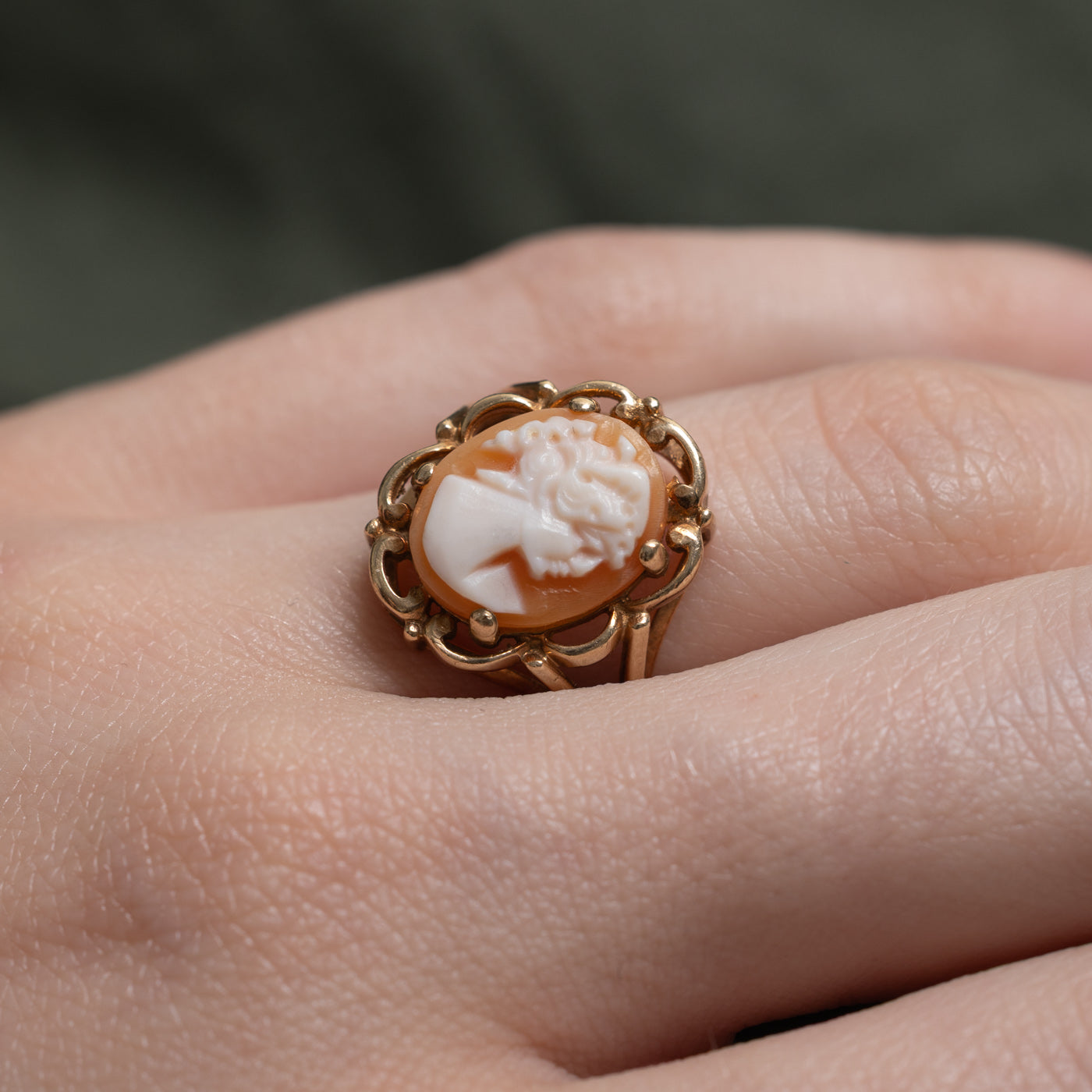
10k Shell Cameo Scalloped Openwork Ring
2.15ct | SZ 7
Prix de détail estimé$1,975 CAD
Prix de vente$625 CAD
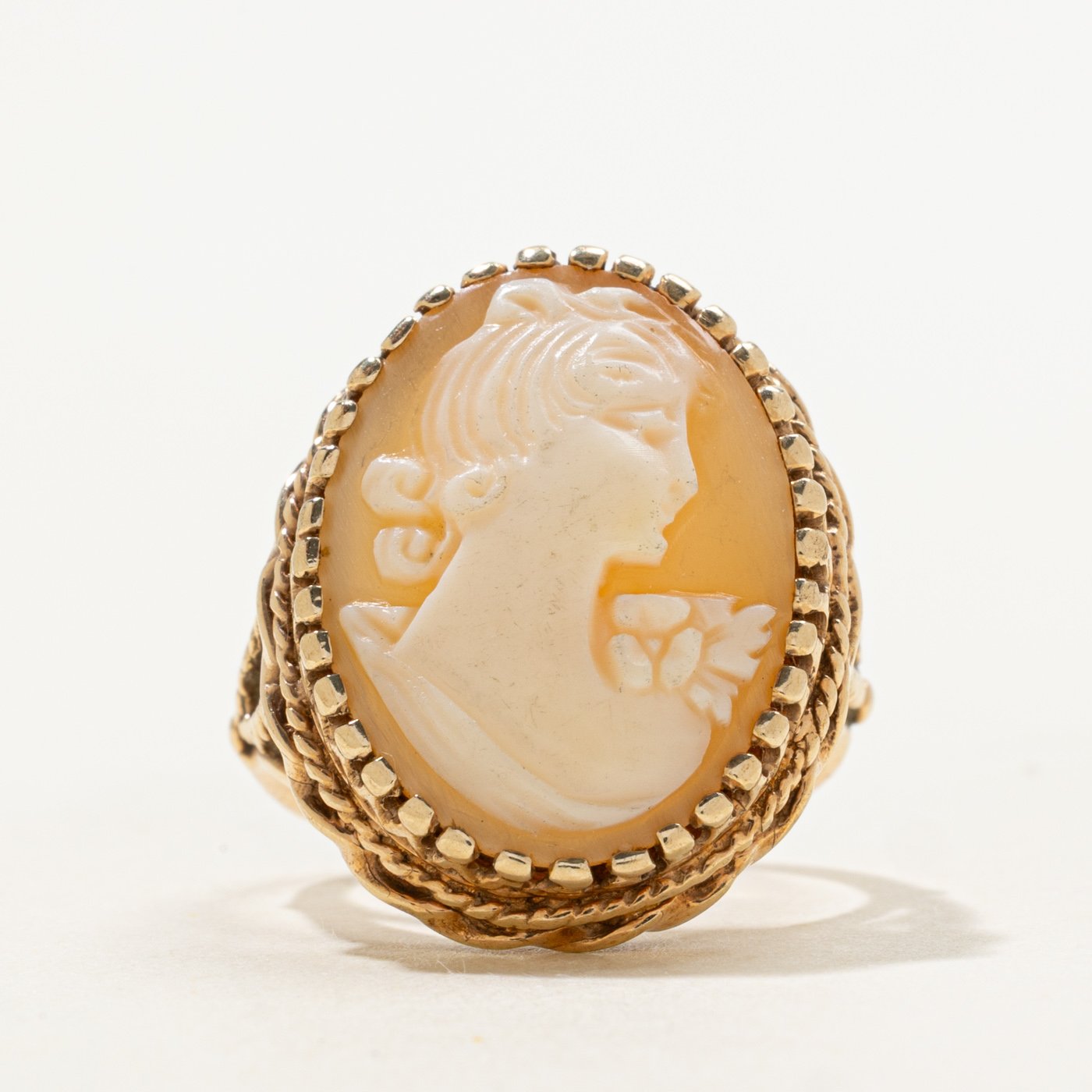
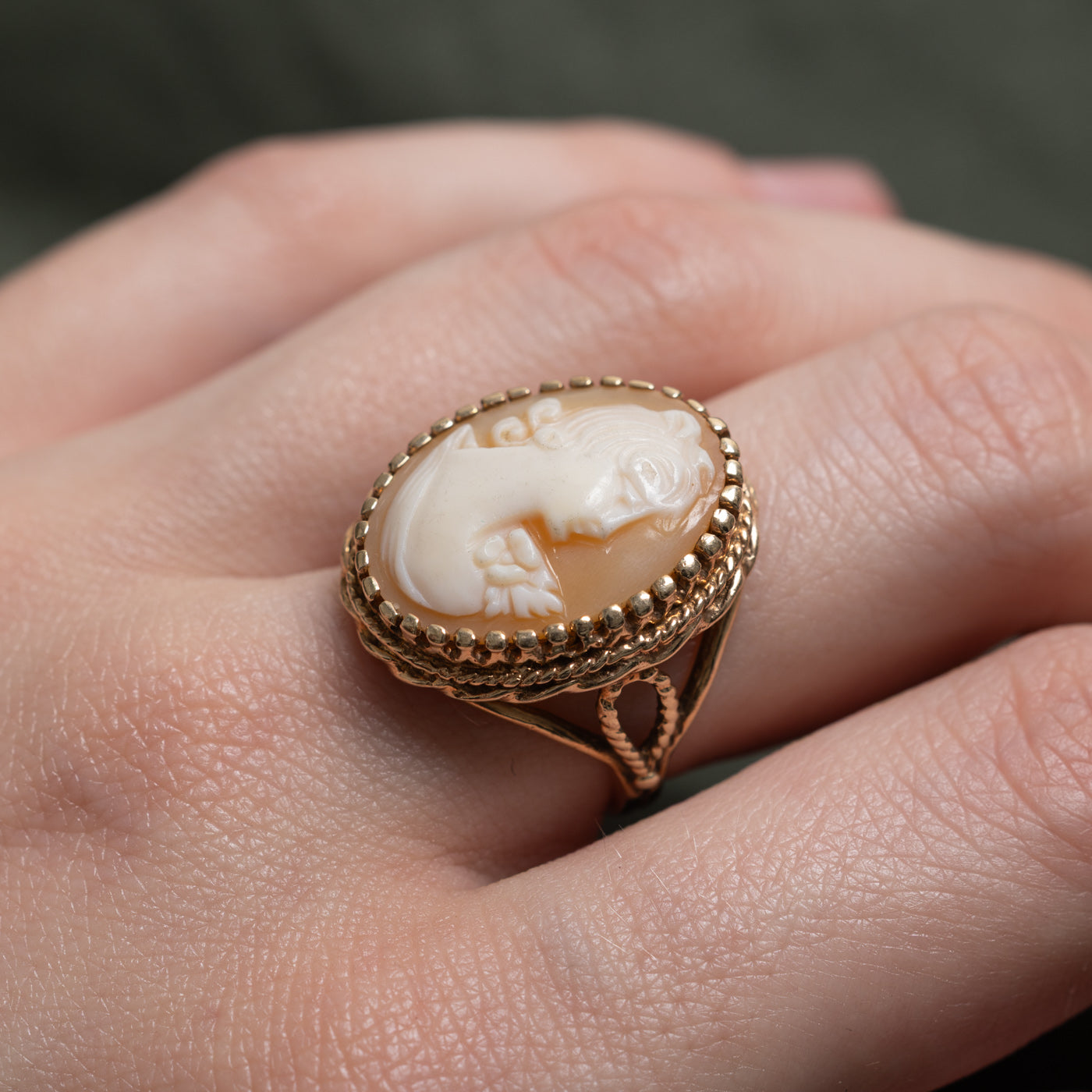
10k Shell Cameo Ornate Cocktail Ring
7.00ct | SZ 5.5
Prix de détail estimé$3,750 CAD
Prix de vente$1,275 CAD
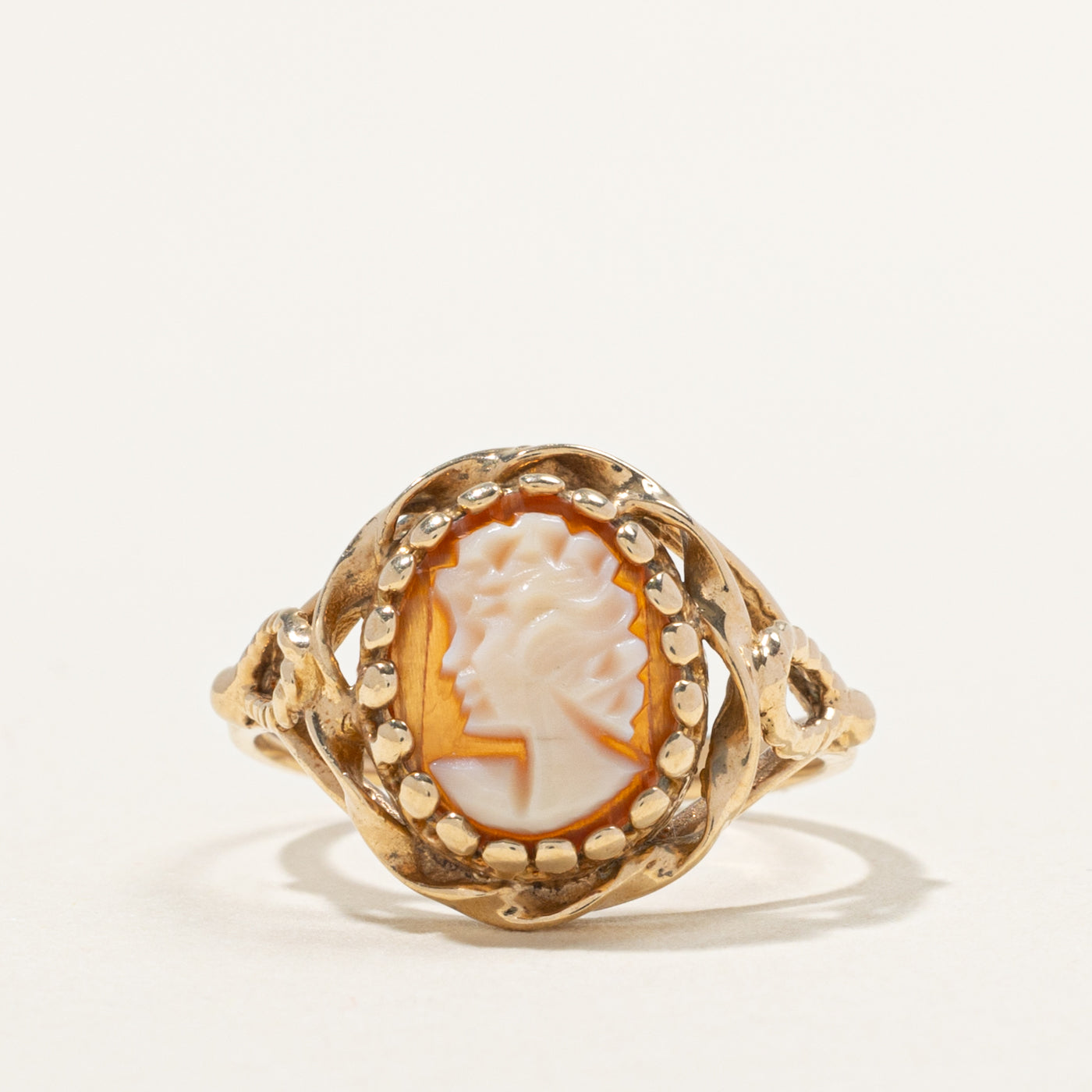
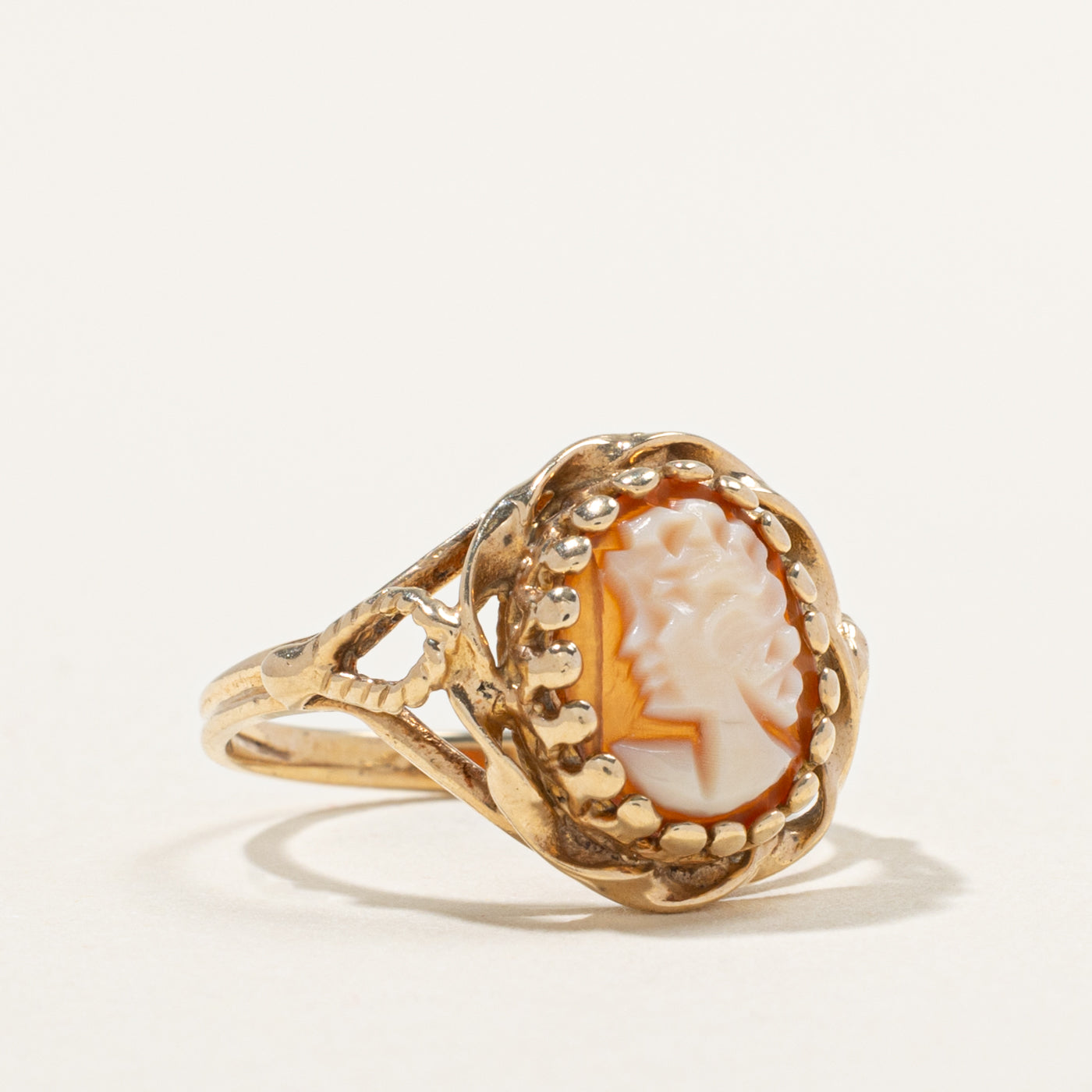
10k Solitaire Shell Cameo Textured Ring
1.20ct | SZ 5
Prix de détail estimé$1,600 CAD
Prix de vente$450 CAD


14k Cameo Scrollwork Engraved Ring
3.25ct | SZ 5.75
Prix de détail estimé$3,150 CAD
Prix de vente$1,175 CAD
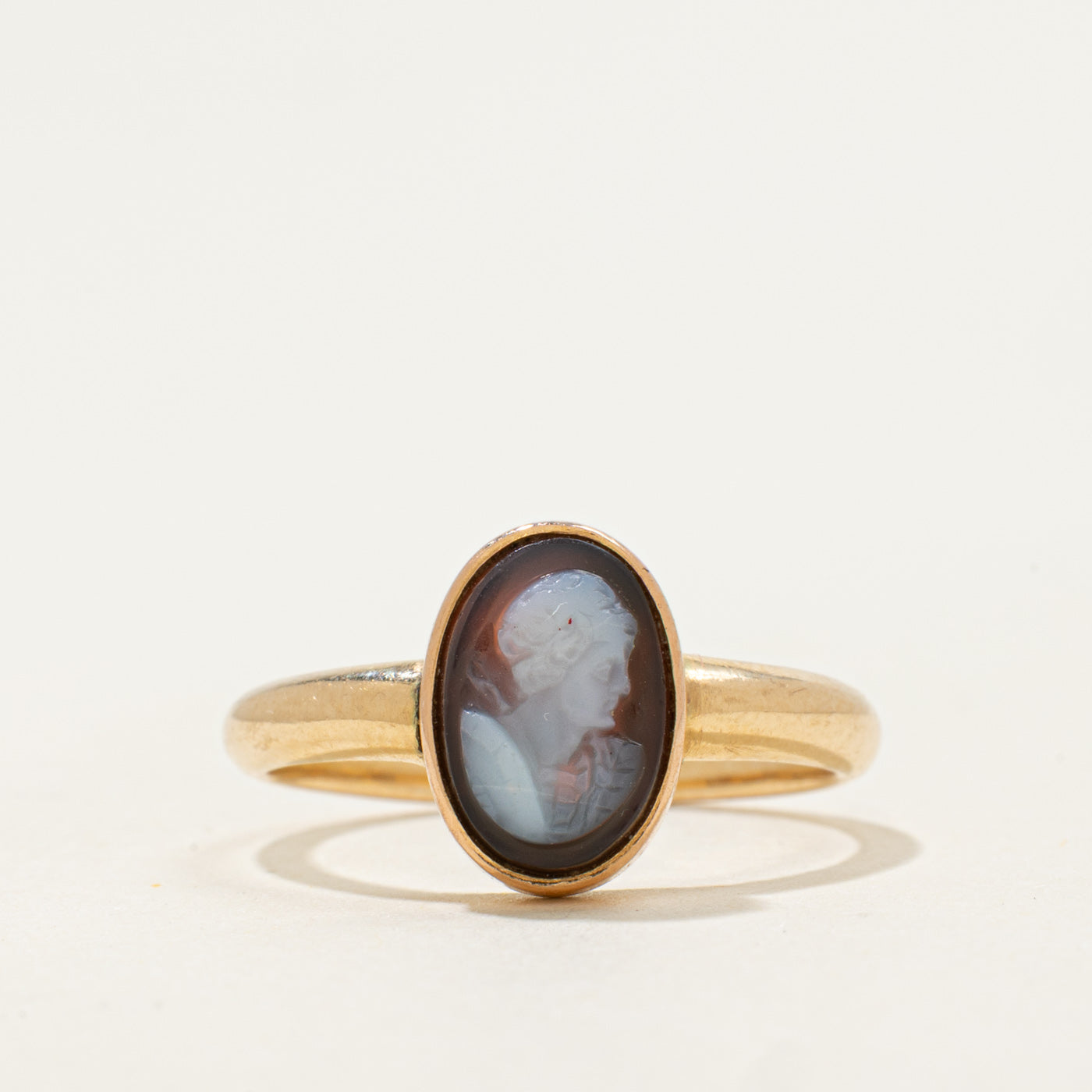

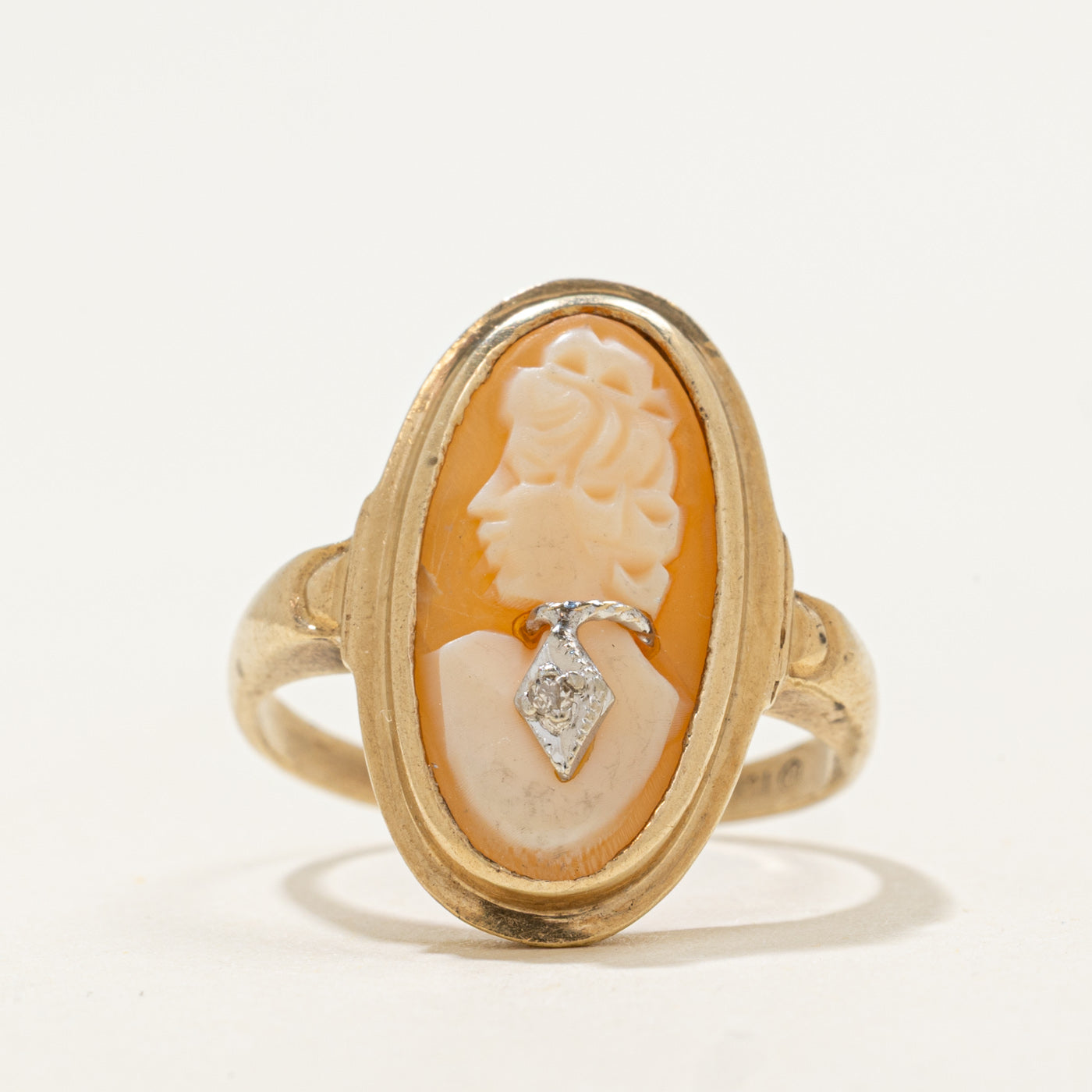
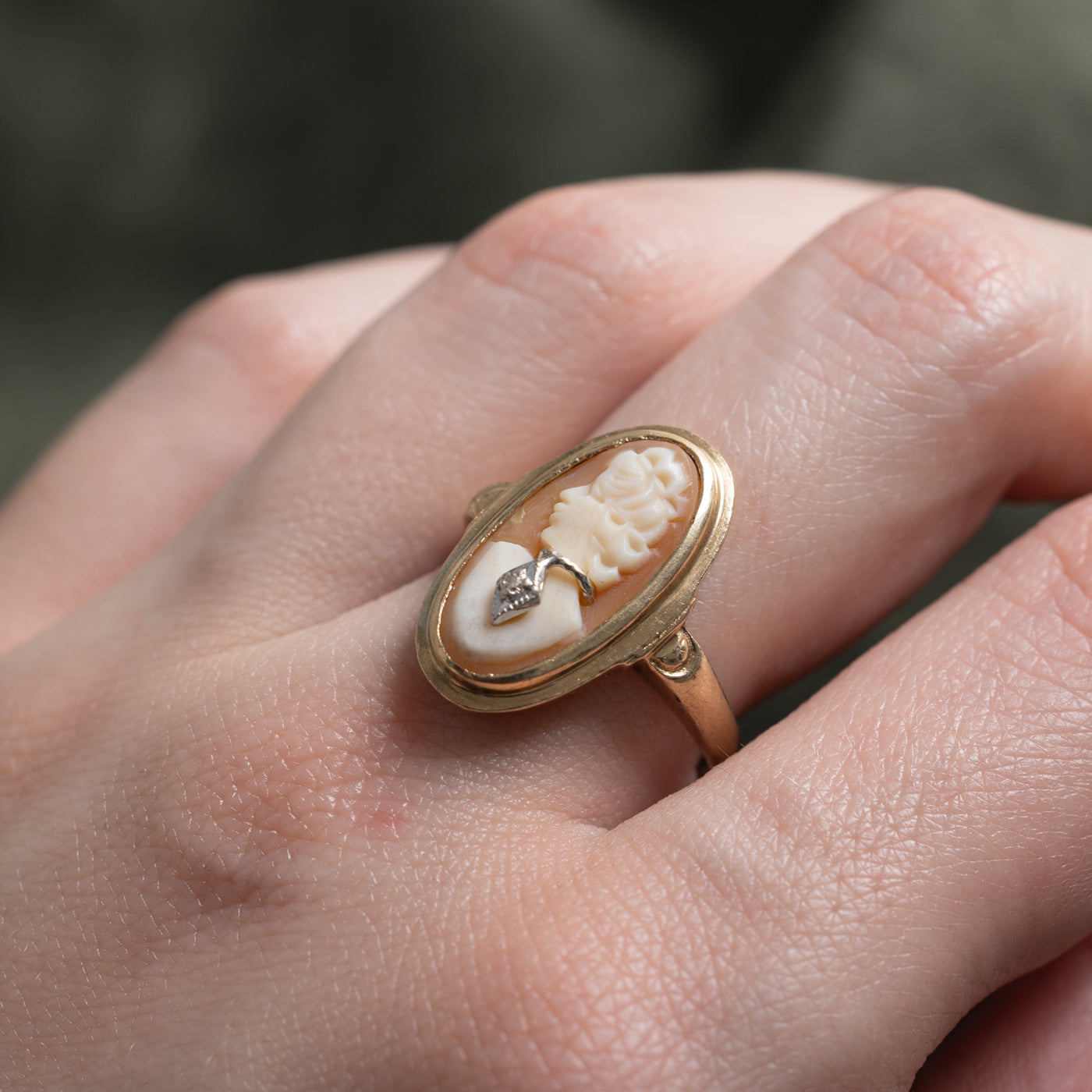
10k Shell Cameo & Diamond Accented Ring
1.7ct, 0.005ct | SZ 8.25
Prix de détail estimé$2,500 CAD
Prix de vente$895 CAD
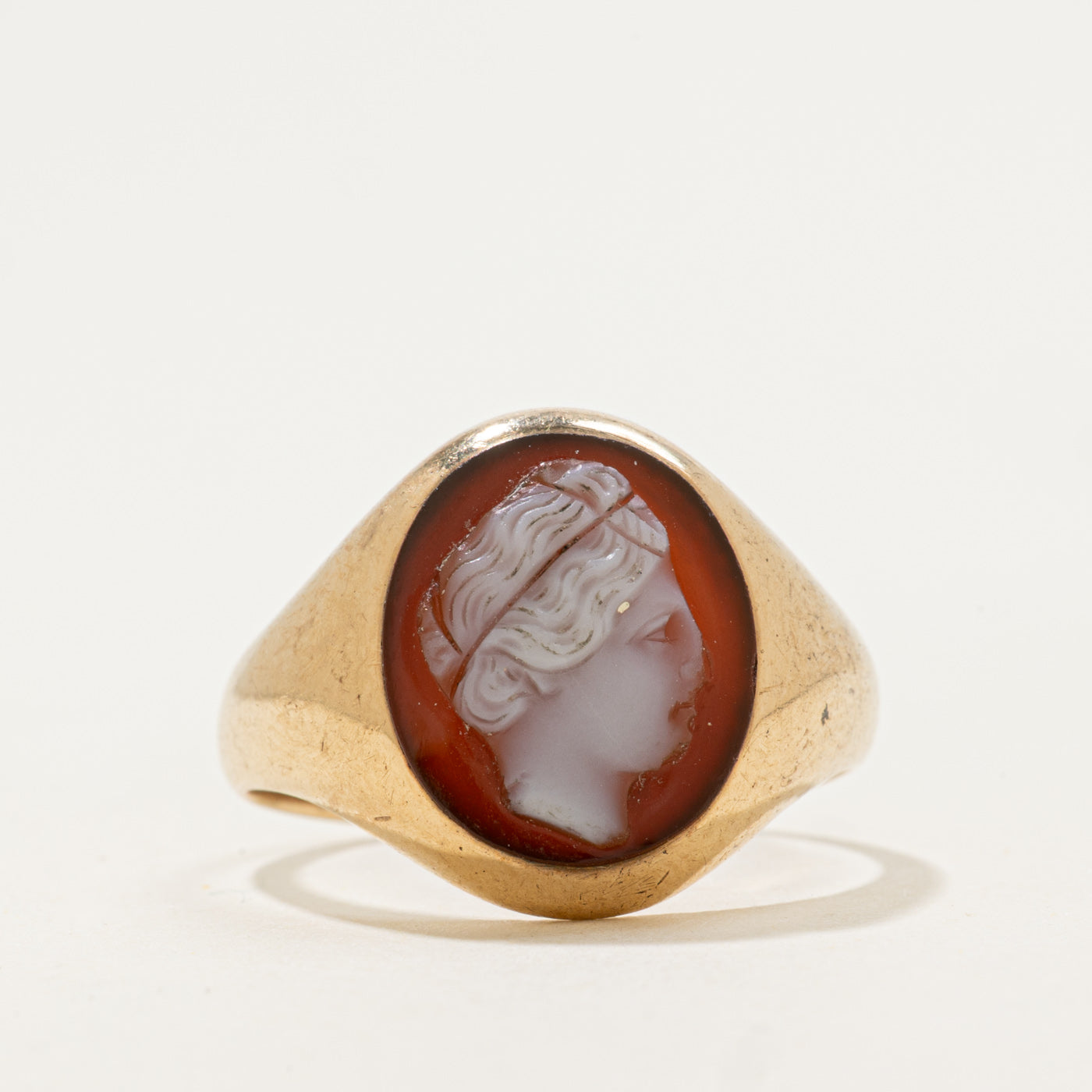
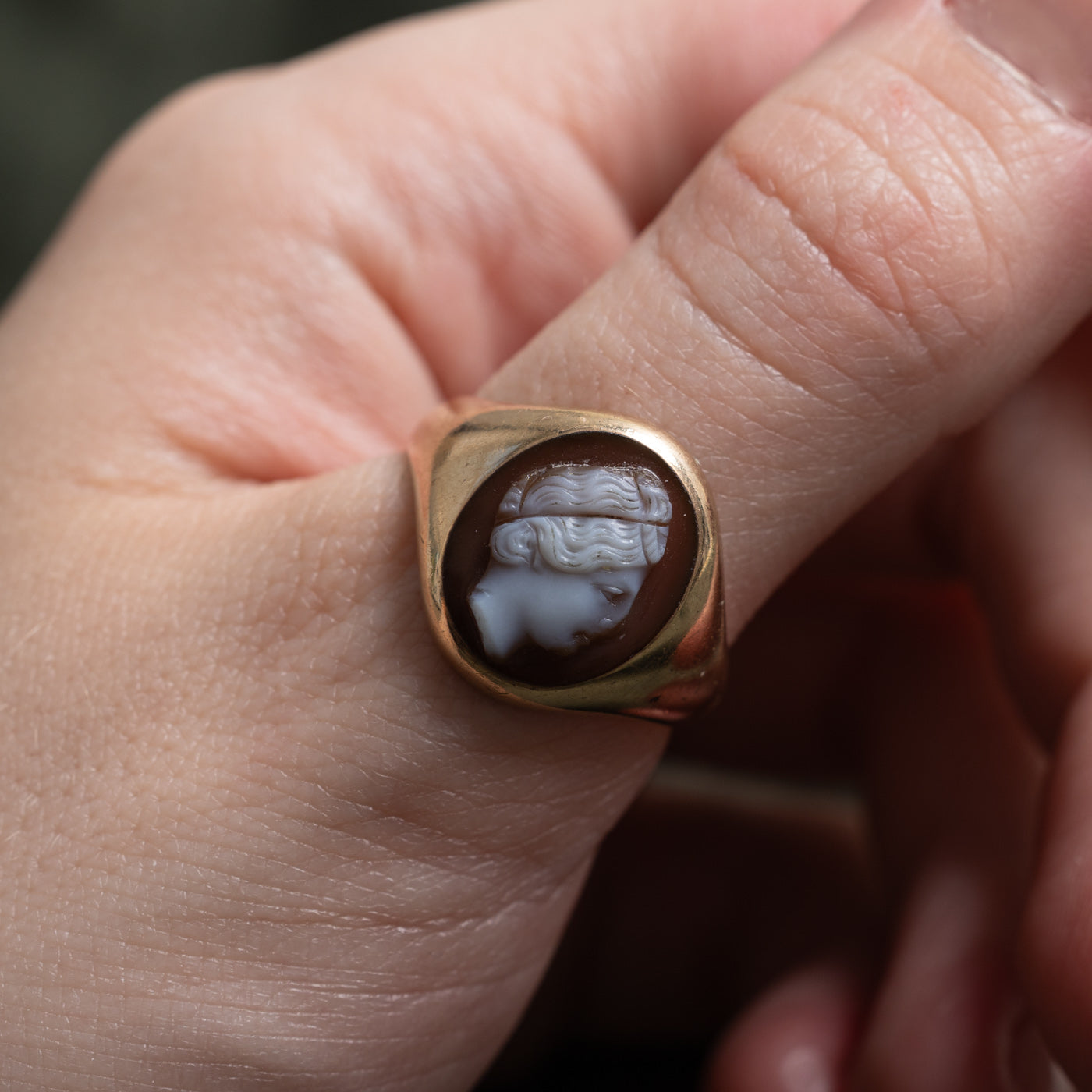
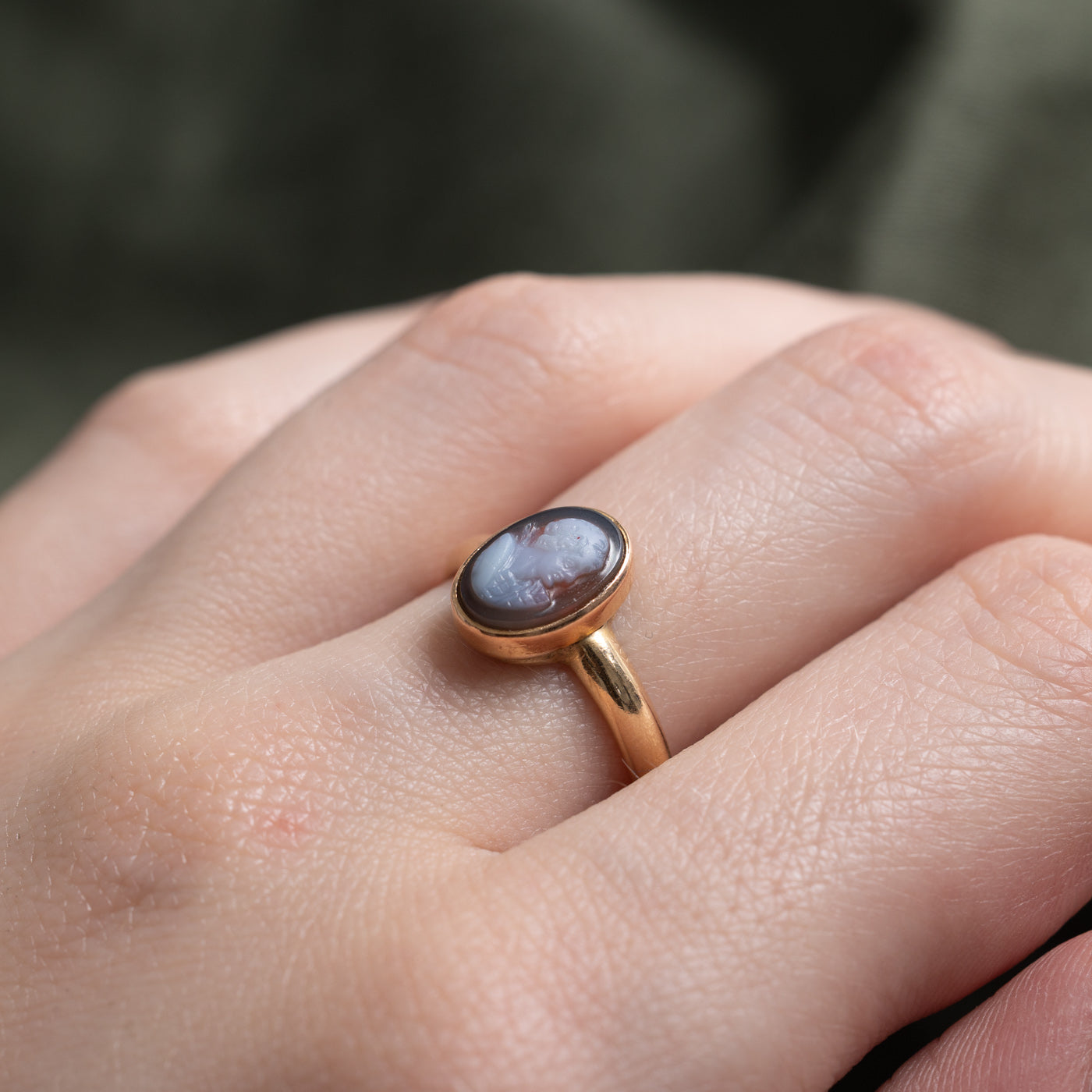
10k Agate Cameo Signet Ring
3.4ct | SZ 10.25
Prix de détail estimé$2,850 CAD
Prix de vente$1,025 CAD
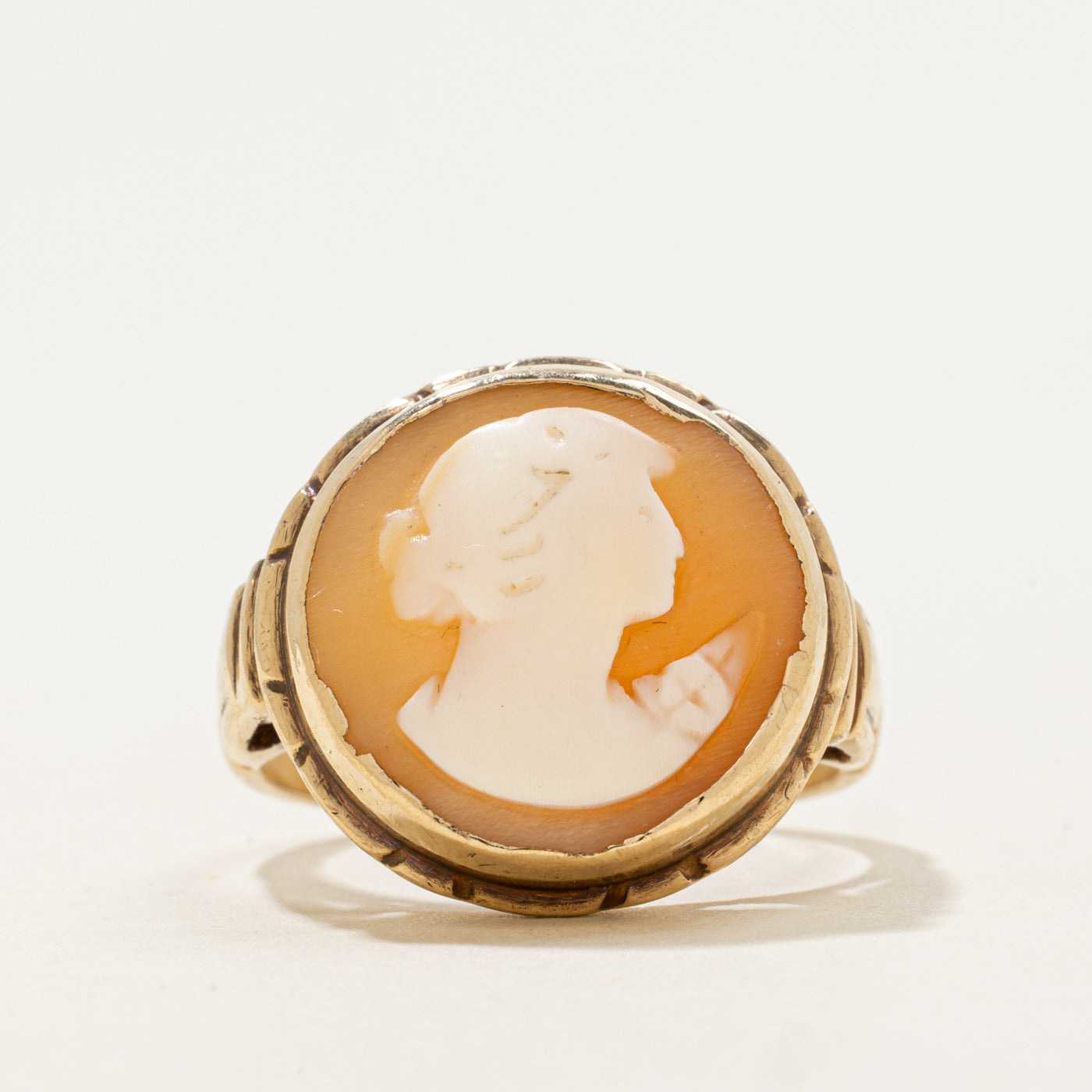
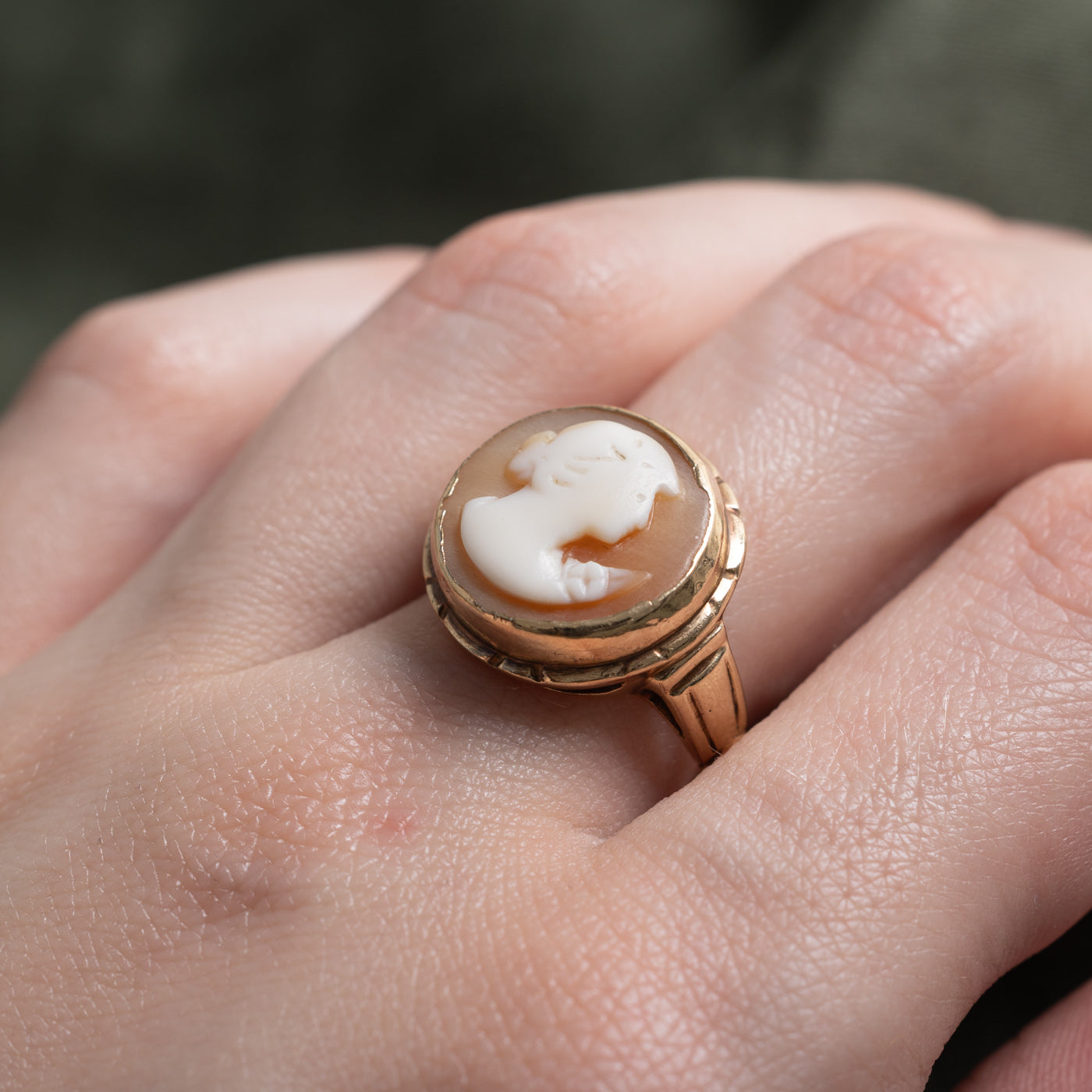
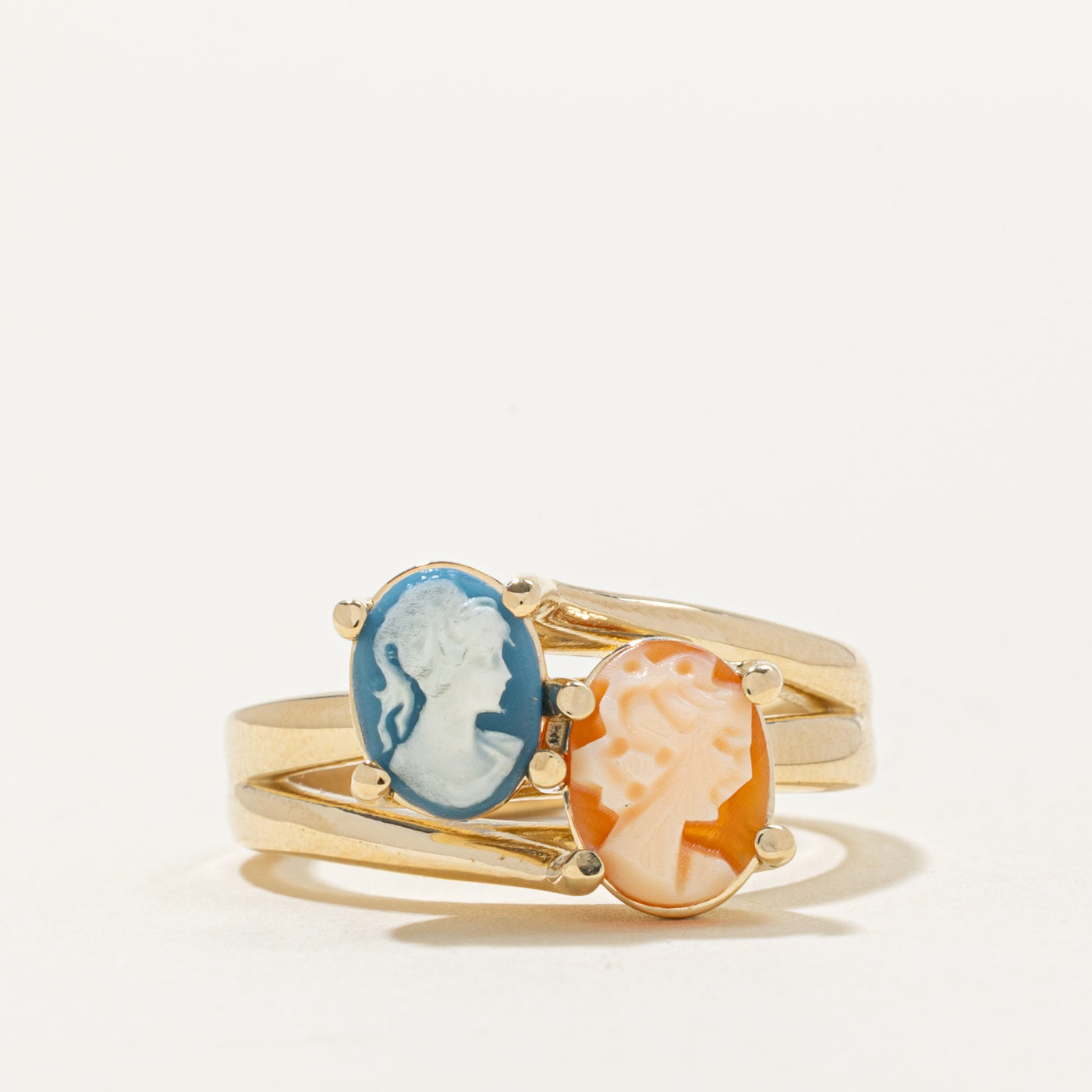
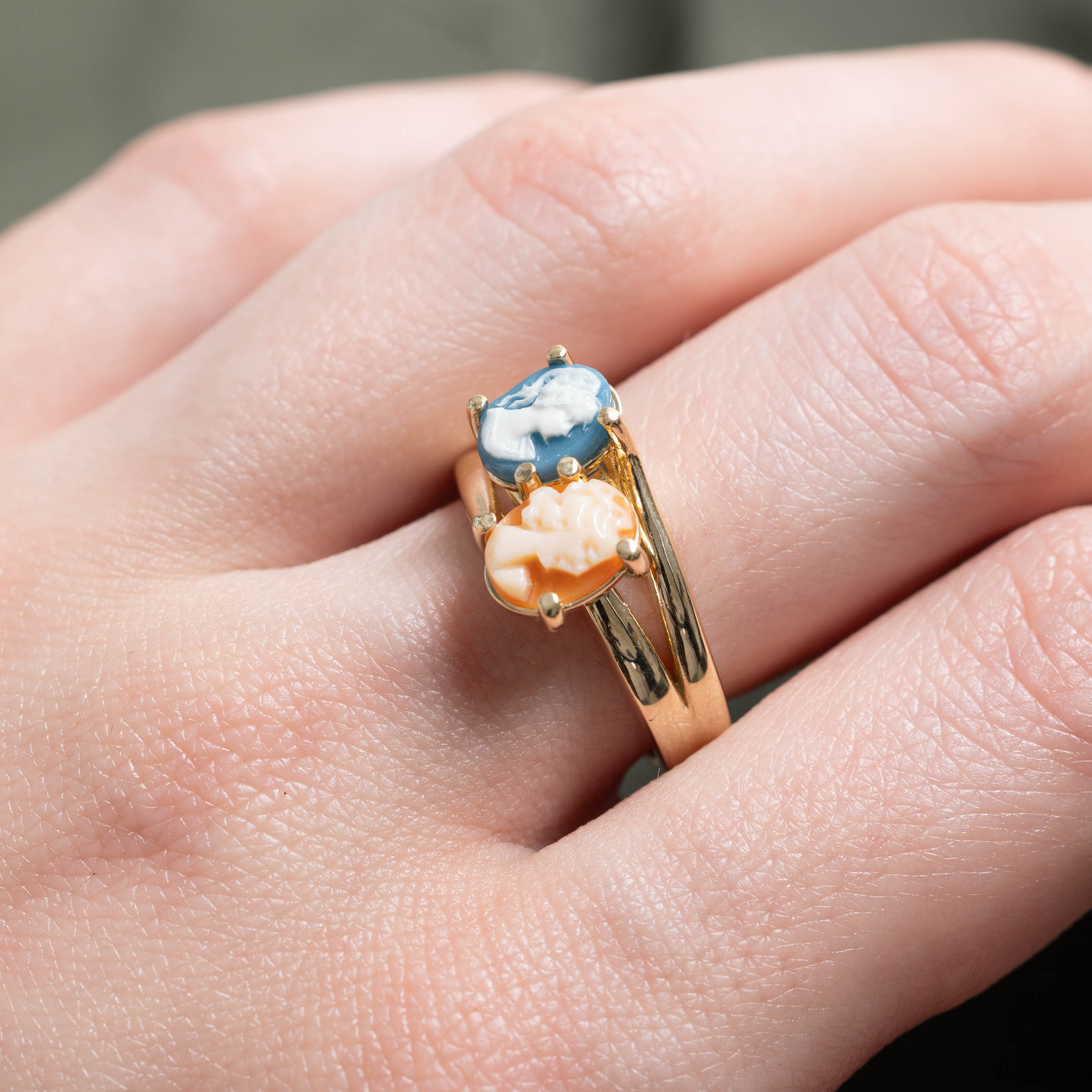
'100 Ways' 14k Cameo Toi et Moi Ring
1.15ctw | SZ 7
Prix de détail estimé$5,700 CAD
Prix de vente$2,775 CAD


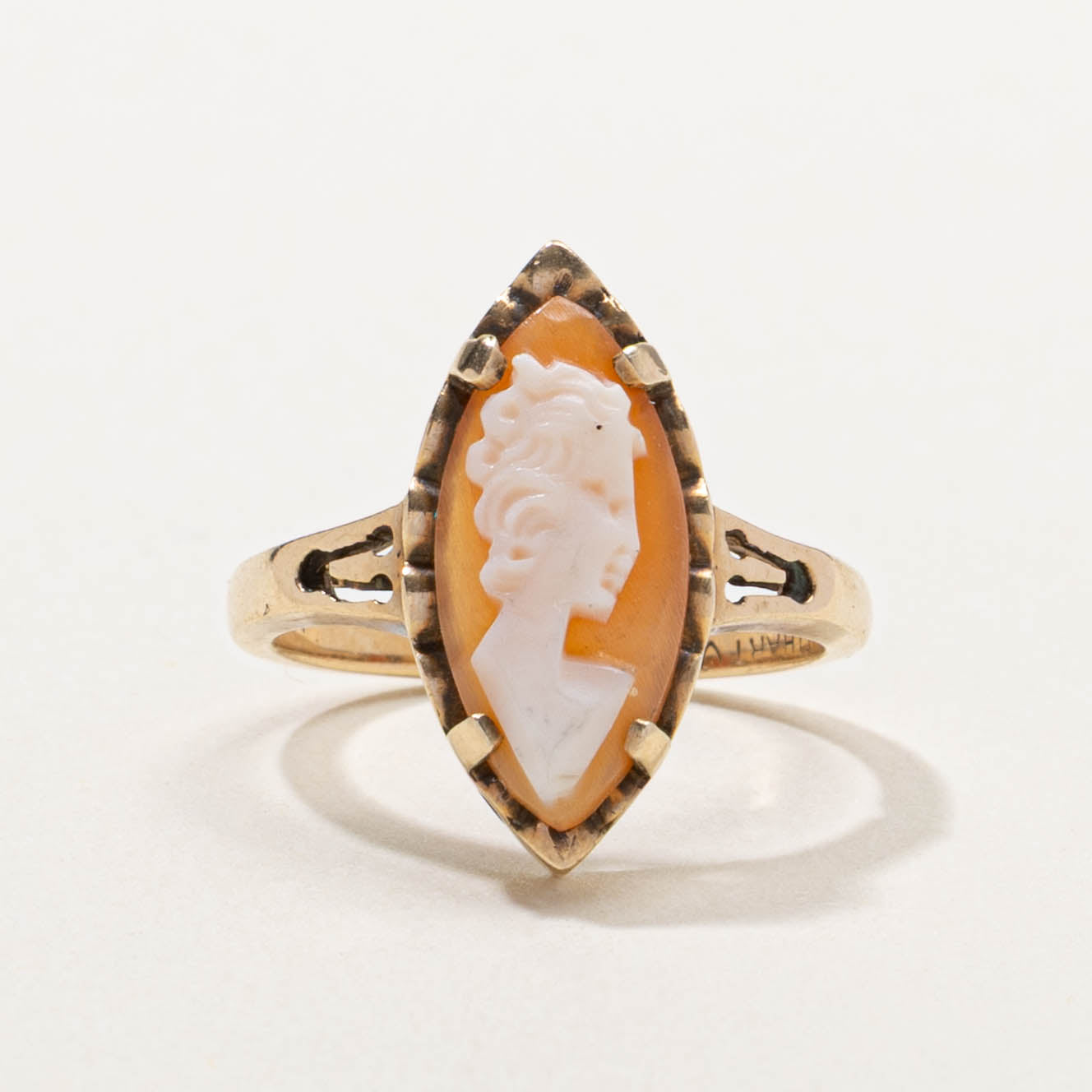
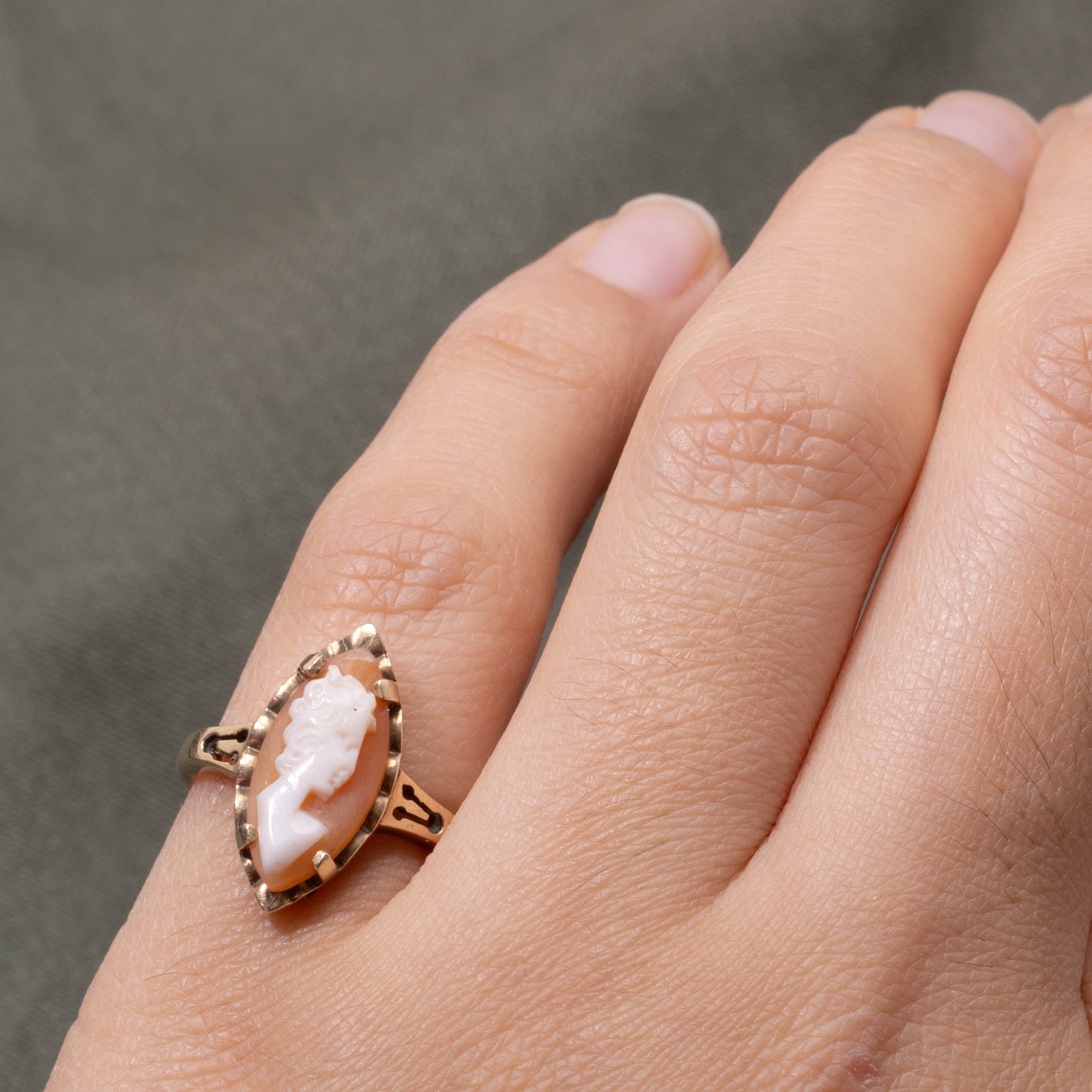
10k Marquise Cabochon Shell Cameo Ring
2.00ct | SZ 4.75
Prix de détail estimé$1,750 CAD
Prix de vente$495 CAD


